Splash247: Starlink runs into a wall in Chinese waters
Elon Musk’s Starlink might have had a banner couple of years building up a huge maritime following, but a court case in China last month serves as a reminder that the satcom provider faces hurdles in offering global coverage.
China has started going after Starlink at sea, firing a clear warning shot at owners using low earth orbit (LEO) kit in its waters with what appears to be the first publicised fine on a foreign ship for running the service off its coast.
In a circular issued last week, Oasis P&I reported that authorities in Ningbo investigated a foreign vessel in December 2025 for using Starlink while in Chinese jurisdictional waters. Local lawyers see it as a test case and a signal that enforcement is finally catching up with the rapid, largely unregulated spread of LEO terminals across the world fleet.
China’s Maritime Safety Administration has, in the words of Oasis, “intensified supervision” over LEO satellite communication equipment – explicitly naming Starlink – on ships in China’s internal waters, territorial sea and even its exclusive economic zone.
Under China’s Maritime Traffic Safety Law, any ship in Chinese waters that needs shore‑based relay must use lawfully established domestic coast or satellite gateway stations. At the same time, rules on direct satellite services make clear that satcom used within Chinese territory must be provided by companies approved in China.
The country’s Radio Administration Regulations add more bite. Radio stations on foreign ships operating within Chinese territory must comply with Chinese law, and where frequencies or stations are used without the necessary authorisations, regulators can order operators to stop, confiscate the equipment and any associated illegal gains, and levy fines that climb from tens of thousands to hundreds of thousands of yuan depending on the circumstances.
The Maritime Traffic Safety Law also allows maritime authorities to hit “relevant responsible personnel” with fines and, in serious cases, suspend seafarers’ competency certificates for up to three months.
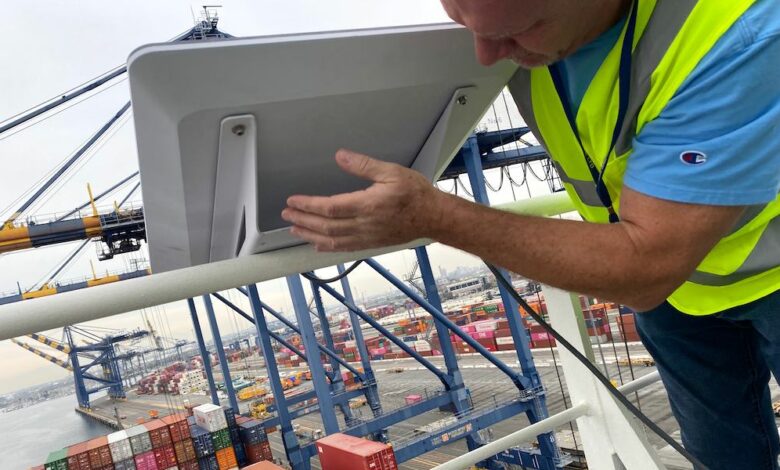
For owners and managers who have just spent the past two years bolting Starlink boxes to monkey islands as fast as they can ship them, this is an uncomfortable collision between tech and geopolitics.
Oasis is telling ships heading to China that there is very little grey area. Starlink and other unapproved LEO terminals should be completely powered down and physically disconnected before entering Chinese jurisdictional waters, with the company going further and suggesting shut‑down before crossing into the exclusive economic zone – in other words, well outside 200 miles.
China has expressed a cautious and critical attitude towards Starlink. The concerns primarily stem from issues related to national security, sovereignty, and potential interference with the country’s own satellite systems. China’s government has raised alarms over the potential for Starlink to be used for surveillance purposes and has emphasised the importance of regulating foreign satellite systems within its airspace.
Additionally, Chinese authorities have highlighted the need for international guidelines to govern the deployment and operation of satellite networks to ensure they don’t interfere with existing satellites and telecommunications. While Starlink is not officially banned in China, its service is not available for use within the country.
Related Posts