
Maritime Executive: Mexico Launches its First Research Initiative in Antarctica
Mexico has launched its first research campaign in Antarctica, with the country leveraging on science diplomacy to access polar frontiers. The research initiative is carried out in collaboration with Ukraine, which is providing Mexican researchers with logistical support as well as access to the Vernadsky Antarctic station. Last month, Mexico formalized a five year Antarctic cooperation with Ukraine. The collaboration involves Mexico’s Research and Assistance Center in Technology and Design of the State of Jalisco (CIATEJ), the Mexican Agency for Antarctic Studies (AMEA) and Ukraine’s National Antarctic Scientific Center.
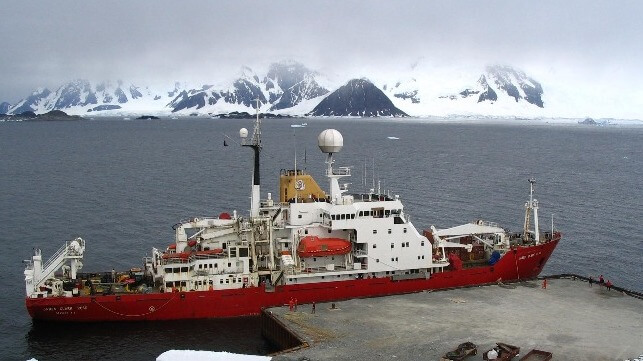
The Antarctic campaign, CAMEX-1, officially kicked off on January 31. The journey to Antarctica was marked by eight Mexican researchers boarding the Ukrainian research icebreaker Noosfera at Punta Arenas, Chile. The researchers will be hosted at the Ukrainian Antarctic research station Vernadsky on the Antarctic Peninsula.
“This campaign will generate key knowledge for understanding life in extreme conditions and addressing global environmental challenges,” commented Lorena Amaya Delgado, Director General of CIATEJ. Adding on the need to participate in polar research, AMEA’s President Patricia Valdespino emphasized that global effects of climate change in Antarctica could potentially affect the Mexican coastline. Recent research indicates that the deep waters of the Gulf of Mexico (renamed in the U.S. as the Gulf of America) receive different ocean currents from Antarctica.
In addition, southern elephant seals, whose natural habitat is Antarctica, have since 2020 been making unusually long journeys north to as far as Baja California in Mexico. Indeed, Mexico and Antarctica are geographically far apart (more than 13,000 kilometers) but the recent events have piqued the interest of Mexican researchers.
Historically, Mexico’s research in Antarctica has been unstructured and mainly driven by individual effort by scientists participating in programs organized by other countries, such as Chile and Argentina. With the signing of a partnership with Ukraine, AMEA noted that it represented an institutional structure for Mexican research activities in Antarctica. Further, the collaboration signifies a transition toward a state policy for polar research.
The start of the Mexican research campaign coincided with Ukraine’s commemoration of its 30th Antarctic Expedition, held on February 6. To mark the celebration, President of Ukraine Volodymyr Zelenskyy held an online meeting with researchers participating in the 30th expedition. Ukraine started operating the Vernadsky station back in February 6, 1996, after being granted ownership by the United Kingdom. The Ukrainian Antarctic mission was further enhanced by the acquisition of the research vessel Noosfera in 2021. The vessel is conducting its fifth expedition.
Top image: Ukrainian research vessel Noosfera, seen here in her former name and role as RRS James Clark Ross (Tom L-C / CC BY-SA 3.0)
Related Posts

#/media/File:RRS_James_Clark_Ross_Rothera.jpg)