Seatrade Maritime: Container lines’ Red Sea mixed messages confuse shippers
Shippers are confused by the mixed messages being sent out from carriers regarding the return of container shipping to the Suez Canal route.
According to Global Shippers’ Forum director James Hookham, Maersk, in its last earnings call of 2025 had said that there would need to be peace in the Middle East before carriers could return to the shorter route between Europe and Asia.
In what Hookham says has been a “bizarre week” Maersk have announced that two of its services, one a standalone service, the MECL, which operates between India and the US East Coast and the other a Gemini Cooperationservice with Hapag-Lloyd, the ME11, which operates between the Mediterranean and India.
“Suddenly, on the latest earnings call and in the media Vincent Clerc [the Maersk CEO] is saying that the company is returning to Suez but with a military escort. The Red Sea is still evidently a high-risk venture and the situation in the wider region is still on a knife-edge, so I’m advising GSF members to be cautious,” said Hookham.
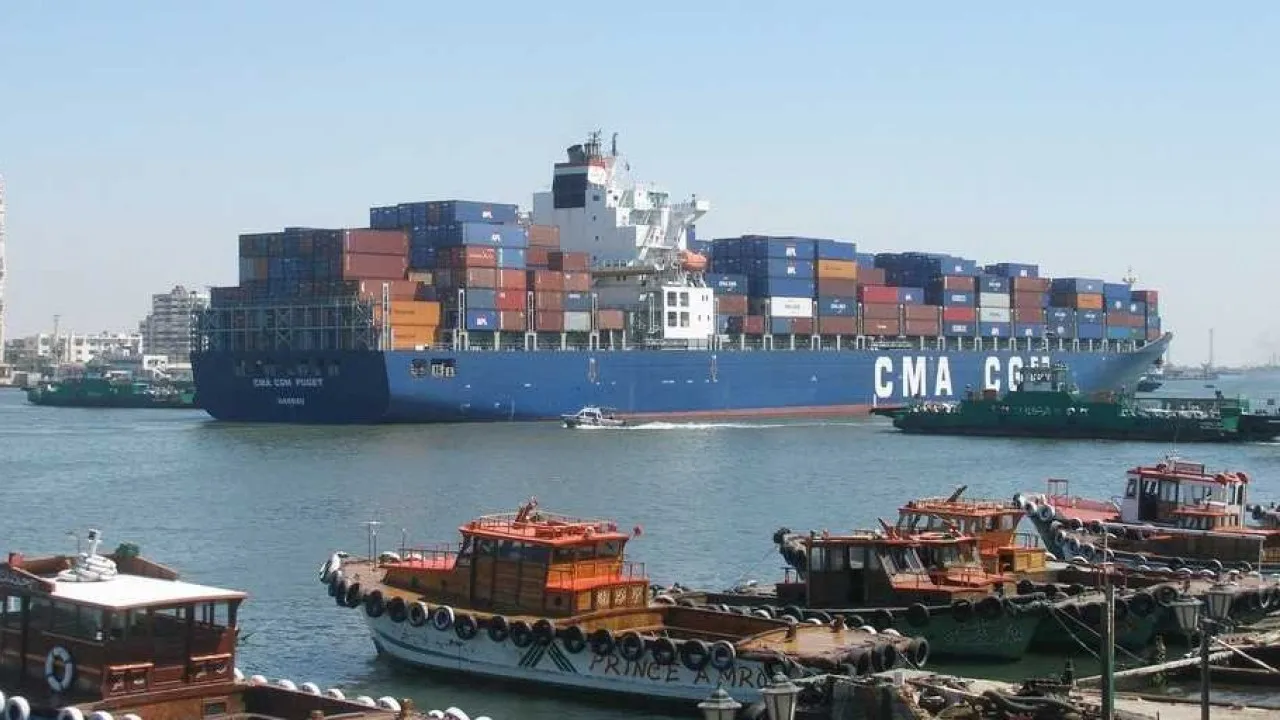
CMA CGM, who had kept a regular service operating through the Suez/Red Sea route, with a French military escort, throughout the period when the Yemen based Houthis were attacking commercial vessels, have now returned their services to the much longer Cape of Good Hope.
In a recently published story in the Financial Times Clerc admitted that a return to Suez would be a “complicated redeployment for the industry as Maersk’s ships need a military escort.”
He added that a full return to the Red Sea route is unfeasible when using military escorts as there are not enough military ships to protect the commercial ships operations at that scale.
Some carriers have continued to operate in the region throughout the period of the Gaza conflict. A number of feeder operators have continued to transit the canal Red Sea and Bab El-Mandeb strait at the southern end of the Red Sea, without incident.
Speculation that Maersk is transporting equipment to the Middle East for the US military in support of the carrier strike group led by the USS Abraham Lincoln, could be a reason for the return of some Maersk services.
However, the Gemini Cooperation, which includes Maersk and Hapag-Lloyd, is also considering a return of the AE12 and AE15 to the region, saying a further announcement will come soon.
Given that the situation is in a state of flux and that the major carriers require a military escort, supply chain managers can be excused for being hesitant when considering the dangers around how some very high value cargoes being transported to consumer markets.
As an aid to industry MDS Transmodal has now started a monthly Suez Monitoring service as a guide for operators, forwarders and shippers as carriers make decisions on which services return to Suez and when.
Antonella Teodoro, an analyst at MDS Transmodal said: “With shipping lines still assessing when – and to what extent – to return to the Suez Canal, the figures point to continued caution.”
Comparing the pre-crisis transits on a month-by-month basis MDS Transmodal data reveals that in January this year 149 container vessels passed through the Suez Canal lower than in January 2024 and 2025at 157 and 174 respectively, but much less than in 2023 when 441 vessels used the route.
.jpg?width=1280&auto=webp&quality=80&disable=upscale "Number_of_Ships_MDS_Transmodal_(002).jpg")
In teu terms the volumes were 4.63 million teu in January 2023 declining to 1.13 million teu the following year and 605,470 teu last year, recovering slightly last month to 703,000 teu.
“Vessel calls and deployed capacity remain well below pre-crisis levels. We will continue to monitor actual containership movements to identify when traffic begins to approach 2023 levels,” said Teodoro.
Related Posts