Seatrade-Maritime: Middle East disruptions ‘weigh heavy’ on the supply chain
Published by Seatrade-Maritime
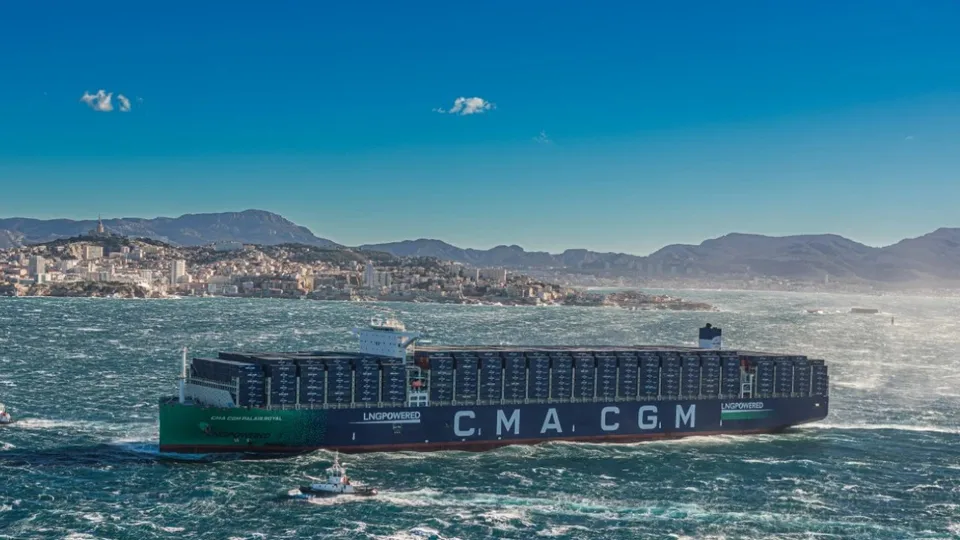
CMA CGM took delivery of its 400th owned ship in January this year, the methanol powered dual fuel ship CMA CGM Monte Cristo entered service on the Asia to Mediterranean BEX service.
The 16,204 teu vessel, sporting 1,000 reefer plugs, is a symbol of modern container shipping, it can operate on low carbon fuel, a modern bow design making the vessel efficient through the water.
CMA CGM Chairman and CEO Rodolphe Saadé, at the announcement of the group’s Q1 results: “In an uncertain geopolitical context, the Group delivered resilient performance in the first quarter of 2026, supported by the strength of our shipping activities and the diversification of our business model.”
In alluding to the weakening performance of the company, Saadé was referencing the Middle East conflict, trade disruptions caused by Donald Trump’s tariff regime.
According to the company’s forward-looking statement tensions in the Middle East are impacting the “market balance” including the rising price of fuel and “changes to freight rates”.
Saadé said that as these “Tensions in the Middle East and disruptions across global supply chains continued to weigh on the industry, we adjusted our network, implemented alternative logistics corridors and maintained reliable service for our customers.”
Oblique references to the market, in particular the “balance” cannot disguise the growing imbalance between supply and demand, capacity and cargo volume, in the container shipping industry.
CMA CGM Monte Cristo is one of nine newbuilds for the French carrier, with 57 ships, with an aggregate capacity of 478,666 teu, delivered up to 21 May this year, according to shipbroker Braemar’s records.
Meanwhile, the shipbroker’s weekly liner report stated: “Global container throughput in early 2026 is growing at roughly 1%. China is at 3.5%. The rest of Asia is managing around 2.5%. Europe is barely moving at 0.5%. The US is down nearly 5%.”
It is in this context that CMA CGM’s Q1 results should be considered, as group revenues declined 0.2% year-on-year to $13.23 billion, and net income plummeted $870 million to $250 million.
It is clear that the nearly 10% fall in average freight rates, to $1,351 per teu on volumes that were up 1.5% to 5.9 million teu was a far greater impact on the company’s Q1 returns than the Middle East conflict.
The group’s logistics business saw a 6.6% increase in revenues, to $4.56 billion, but EBITDA was down 17.2% to $330 million, which was, “Mainly due to perimeter effects and foreign exchange impacts,” said the company.
It terminal and air cargo businesses did record Q1 revenue and EBITDA gains of 59% and 90% respectively, but the $294 million EBITDA barely moved the dial on the group’s overall performance.
Related Posts