Freightwaves: FMC’s DiBella: Ports are key to U.S. economic security and stability
WASHINGTON – The United States has a rare opportunity to revitalize its shipping industry and strengthen the port foundations for freight movement and economic security.
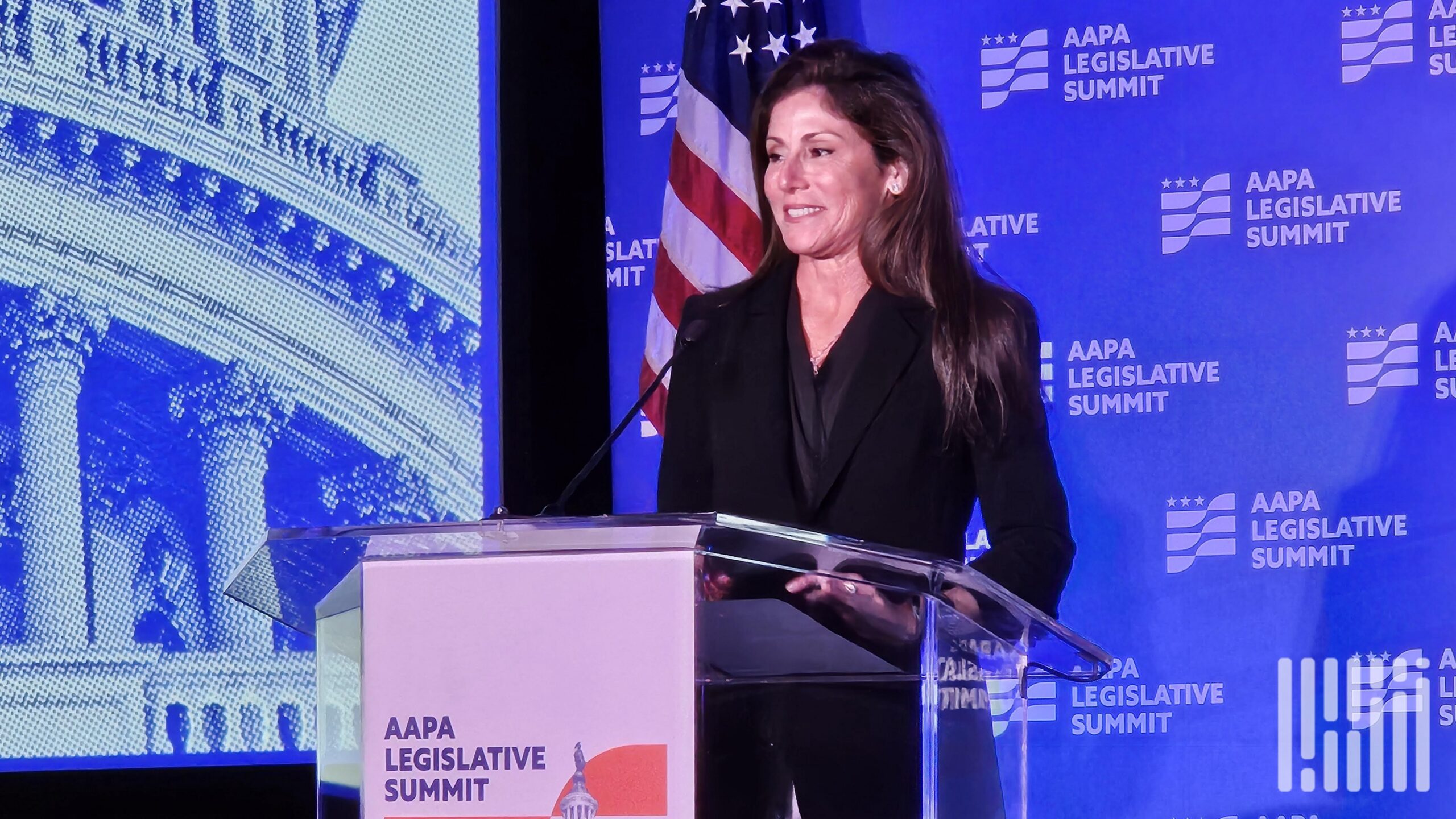
Calling it “a very critical moment”, new Federal Maritime Commission Chair Laura DiBella told a ports conference that the Trump administration is making “the strongest push in decades to support the industry.”
DiBella was Florida’s first female Secretary of Commerce, president and chief executive of Enterprise Florida, and president of business development at the Florida Department of Commerce, and brings an eye for enterprise to maritime.
Federal Maritime Commission Chair Laura DiBella is fired up about the domestic industry’s future. (Video: FreightWaves/Stuart Chirls)
The supply chain crisis spurred by the coronavirus pandemic “changed the world’s perspective on seaports forever and in my mind, for the best,” she said. “I can say, with absolute certainty, that economic development, economic security and economic stability would not exist without seaports, period, full stop. There are not enough planes, trains or trucks to support the amount of cargo moved by ship. The critical infrastructure that our seaports function as are as indispensable hubs for logistics supply supply and consumer goods, energy and raw materials while driving economic growth, generating jobs, serving as powerful innovation centers, and acting as strategic national security assets.”
With more than 80% of global trade moving by sea, and more than 95% of U.S. [import] cargo entering by ship, DiBella said, seaports are vital economic engines, contributing significantly to the U.S. economy supporting local and national economic growth. They serve as the backbone of the global economy by handling over 80% of international merchandise trade volume.
An area that isn’t reinforced enough, DiBella added, is the role that seaports play in supporting small businesses – a segment that accounts for 98% of all businesses.
By providing access to the global marketplace and facilitating international trade, seaports contribute to community development, provide opportunities for small businesses to diversify their operations, and serve as a gateway for small businesses to connect with businesses of all sizes and types, ensuring the ability to compete on a global scale.
While DiBella said that she loves the Maritime Opportunity Zones in the MAP, “I trust that there will be a balance between investment there while at the same time not losing focus on our present day maritime opportunity zones, which are seaports.
“Dredging, deepening, berth enhancements, crane upgrades, road and rail improvements – so much is needed on all fronts today, and I along with all of you, and look forward to seeing the financial support to get this Commission in the flow.”
Nominated by Trump in September 2025 and confirmed by the Senate in December, DiBella was elevated to chairman by the President in January. She is the third woman to lead the agency, after Helen Delich Bentley and Elaine Chao. She emphasized the bipartisan composition of the FMC, which includes Republicans Rebecca Dye and Robert Harvey, who awaits confirmation. Daniel Maffei and Max Vekich are the Democratic commissioners.
“We don’t see party lines in much of what we do, which I think is just a wonderful aspect of the maritime space is that we’re all, to use a pun, we’re all rowing in the same direction, and it’s working very, very well.”
The FMC traces its origins to World War I, said DiBella, and its role was accelerated during the Kennedy administration. She called the agency’s role “complimentary” to, and “partners” with, sister seatrade regulator, the Maritime Administration.
Marad focuses primarily on Jones Act and U.S.-flag shipping, she explained, while the FMC was not only created to support that part of the industry but concentrates on cargo in order to protect consumers, and U.S. importers and exporters – shippers.
“When it comes to the U.S. shipper, wherever that cargo is in the world is our jurisdictional authority.” she said.
DiBella’s remarks came during the American Association of Port Authorities legislative summit.
Related Posts