Freightwaves: Here’s where container rates will go in extended Iran war
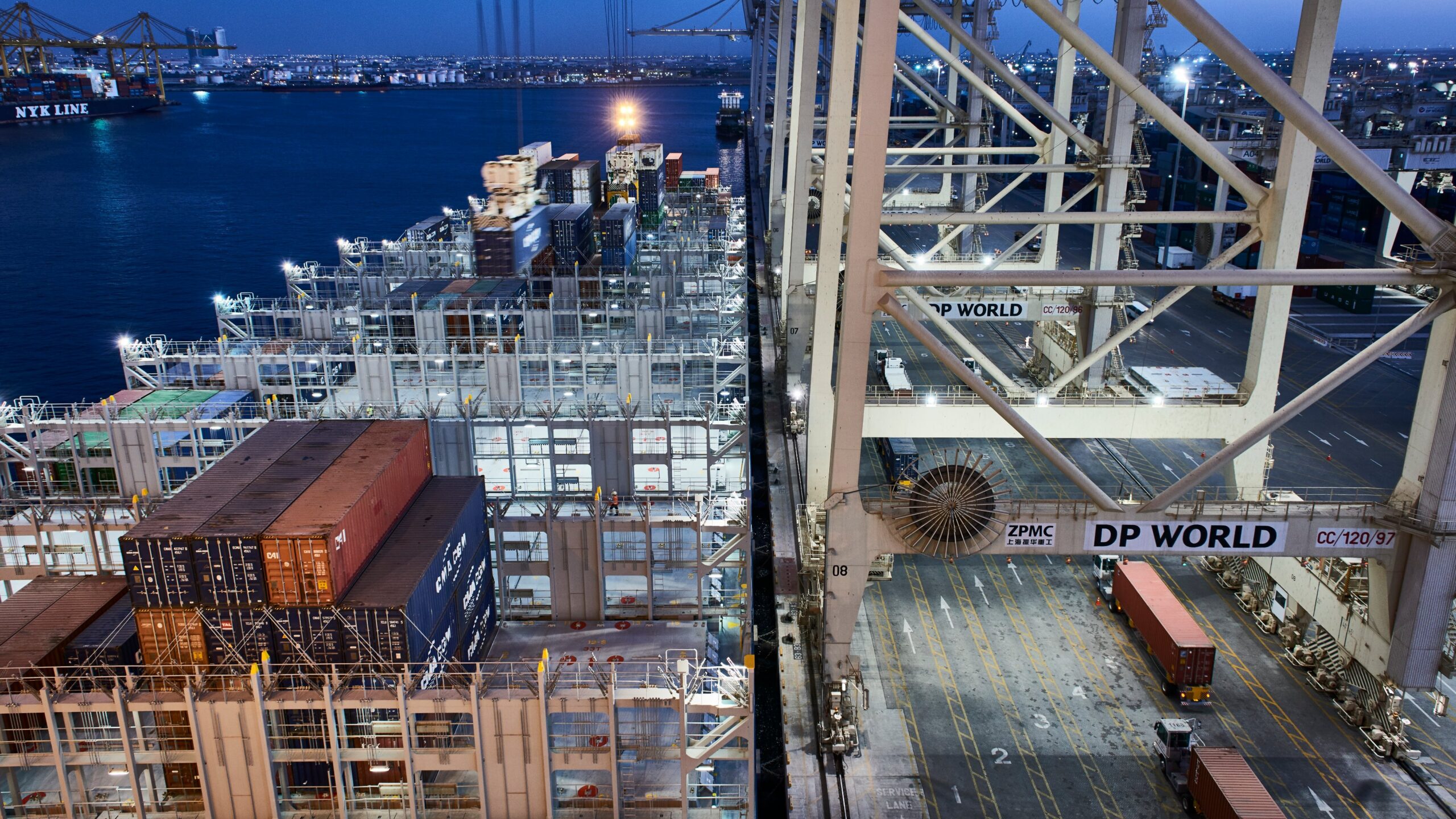
As the U.S. threatens to escalate attacks against Iran, the shutdown of a key Persian Gulf shipping lane is causing congestion at regional ports that threatens to spread to the global supply chain.
Now entering its second week, the undeclared war has hampered ports and vessel movements in the region as Iran effectively shuts down the Strait of Hormuz, the narrow passage to the Persian Gulf.
“The U.S.-Israel strikes on Iran and subsequent Iranian retaliation targeting multiple countries in the area since the weekend are driving significant logistics disruptions in the region which could start to be felt more broadly if the conflict stretches on,” said Judah Levine, head of research for ocean and air analyst Freightos (NASDAQ: CRGO).
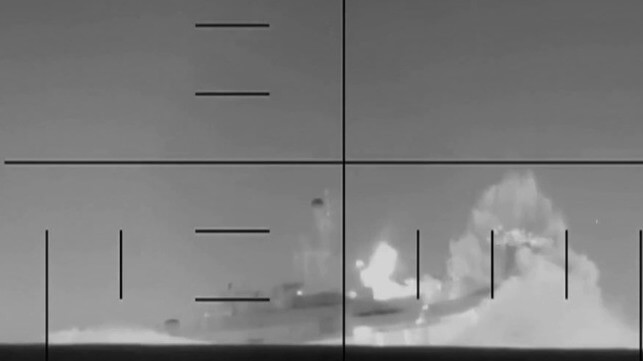
Six tanker vessels in or near the Strait of Hormuz came under attack early this week, Levine said in a note to clients. But President Donald Trump posted on social media that the U.S. would facilitate insurance and naval escorts to keep oil tankers moving through the strait, “though experts are skeptical of the feasibility of and speed at which these could be provided.”
About 20% of the world’s crude oil moves through the waterway; 80% of Iran’s output goes to China. While that would seem to put a crimp in Beijing’s supply, Tehran has a new freight-only rail line to China that opened regular operations in 2025 as a bypass to the Strait of Hormuz. It’s unknown what capacity the route can support but plans envision hundreds of trains per year.
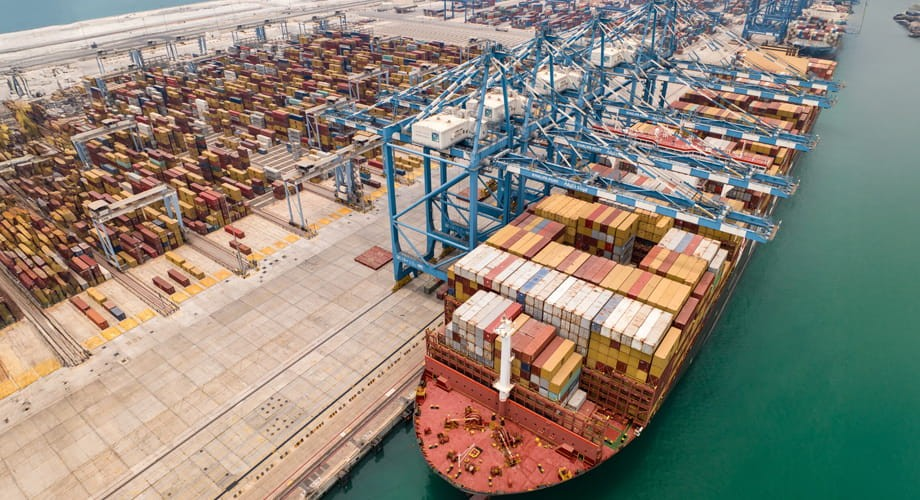
DP World briefly suspended operations at the container port of Jebel Ali in Dubai, Levine said, after an aerial interception caused a fire there Saturday night but reopened on Monday.
While regional ports remain operational, Levine said major carriers are managing security risks by diverting vessels, cancelling sailings and suspending new bookings.
“Hapag-Lloyd and MSC suspended bookings out of Persian Gulf ports and from all origins to these ports – including Oman and United Arab Emirates ports on the Gulf of Oman side of the strait because of their proximity,” he said. “CMA CGM stopped accepting all bookings to and from Persian Gulf ports only. Maersk suspended all new reefer bookings to the entire region, and bookings out of India to the gulf because of the short lead time.”
For now Maersk (MAERSK-B.CO) is still accepting general bookings from the Far East, “possibly reflecting optimism that the Strait of Hormuz could reopen relatively soon.”
But the canceled sailings mean gulf-bound containers are starting to pile up and threaten congestion in India. “They could likewise lead to some backlogs at Far East origins that may start to be felt by other shippers out of those ports if the shutdown lengthens,” Levine said.
Carriers still sailing to the region are diverting containers already in transit to alternative destinations in the area with most volumes likely to be offloaded at the major Far East transshipment hubs in Singapore, Malaysia and Sri Lanka.
“A similar shift to transshipment in the early months of the Red Sea crisis led to significant congestion at these ports in 2024, but with lower volumes and more port capacity this time, congestion should not be as severe,” Levine predicted.
Annual container traffic through the strait totals 2% to 3% of global volumes. Estimates of capacity from approximately 100 container vessels stranded in the Persian Gulf range from 1% to as much as 10% of effective capacity.
“The longer these vessels and equipment are out of circulation, the more likely that reduction will be felt in terms of available capacity and equipment out of the Far East,” Levine wrote. “When traffic through the strait resumes, there will likely be some vessel bunching at these ports too, as ships arrive off schedule. Taken together with climbing fuel costs, these factors could start pushing rates up on non-gulf lanes.”
CMA CGM introduced an emergency surcharge of $3,000 per forty foot equivalent unit (FEU) for containers heading to the gulf, Levine noted, and other carriers are also applying fees for diverted bookings. Freightos rates for Shanghai to Jebel Ali spiked from $1,800 per 40-foot container on March 1 to more than $4,000 per FEU by March 3, likely reflecting these surcharges.
On the main east-west trades, the approaching end of the Lunar New Year holiday saw stable rates. Asia-U.S. West Coast prices were unchanged at $1,843 per FEU, and Asia-U.S. East Coast prices stayed level at $3,022 per FEU.
Maersk and CMA CGM retreated from their abortive return to the Red Sea after Houthi rebels in Yemen threatened to resume attacks in support of Iran. Major liner operators have diverted away from the Suez Canal route and around the tip of Africa since late 2023 for services connecting Asia with the Mediterranean, Europe and the United States. The Iran situation will possibly push a full Red Sea return farther off again, Levine said.
Read more articles by Stuart Chirls here.
Related Posts