Freightwaves: Leaner inventories weaken ocean demand, a harbinger for higher tender rejections, increased truck rates
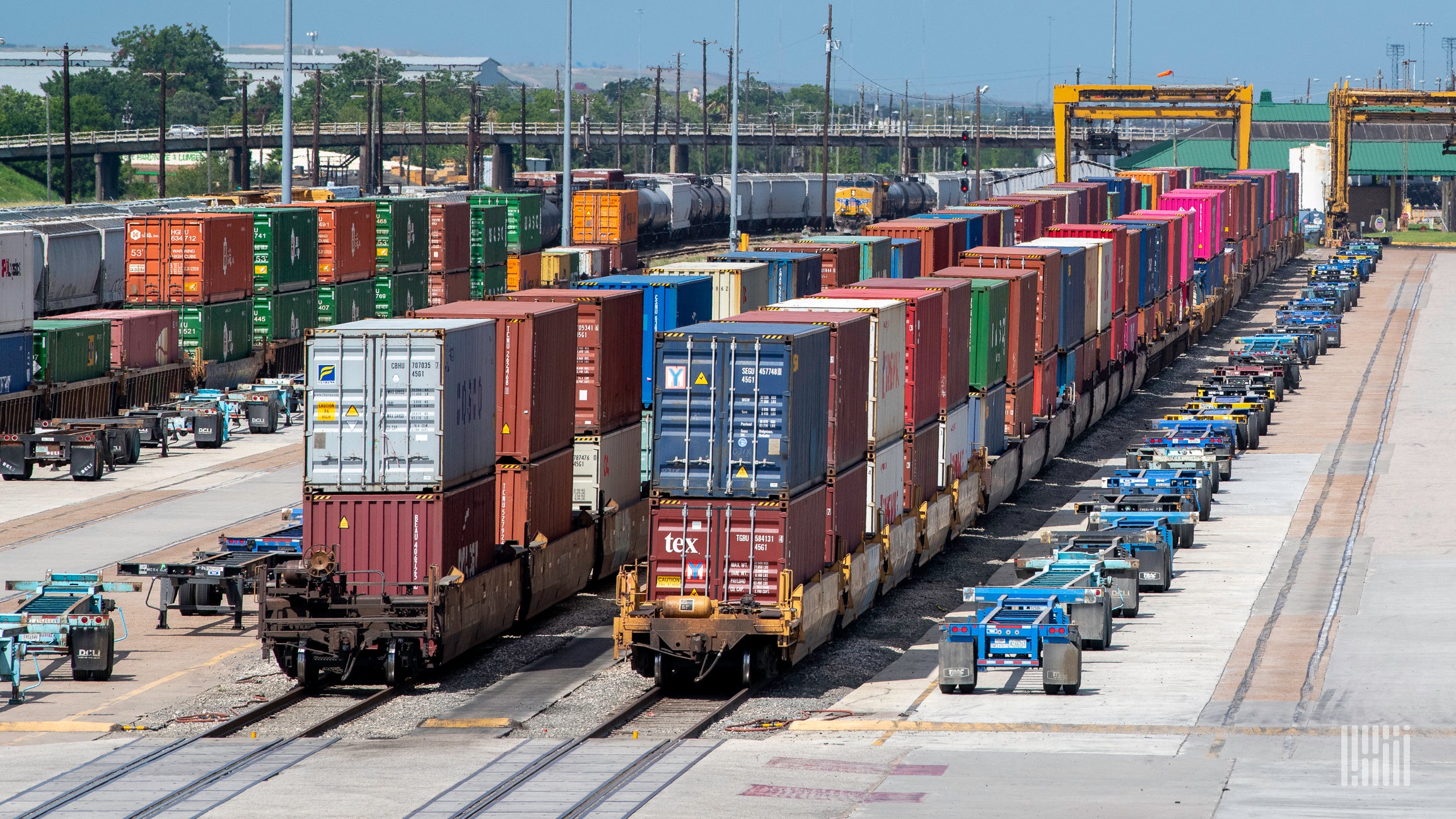
Robust consumer spending fueled an aggressive drawdown in inventories in December, creating a lean, just-in-time approach by shippers in the New Year that has weakened ocean shipping demand but fueled expectations for even greater increases in trucking tender rejections and rates in the near term.
Falling prices on the benchmark eastbound trans-Pacific trade lane has come at the expense of weaker IPI shipments, analysts said, as international volumes give ground to higher domestic intermodal traffic.
The Commerce Department’s monthly inventory data showed declines in business inventories for December, including durable and nondurable goods, consistent with restocking being delayed and stocks being cleared aggressively. This aligns with a broader pattern of manufacturers and traders reducing import-related inventories heading into 2026.
A decline in the December Logistics Managers’ Index showed shippers drawing down December inventories could accelerate the move to higher velocity freight networks, raise truckload spot and contract rates in the near term, and pressure carriers on tender acceptance, especially if intermodal share remains limited.
Container rates on the eastbound trans-Pacific have stabilized after falling for several weeks since a frontloading rally prior to the start of Lunar New Year Feb. 17, when factories and other businesses close for several weeks.
Ocean carriers are reportedly offering discounts to shippers while increasing the number of blanked (cancelled or delayed) sailings in an effort to rebalance capacity and demand. Judah Levine of analyst Freightos (NASDAQ: CRGO) in a note to clients said that rates are starting to slide a little earlier than usual [ahead of Lunar New Year] suggesting carriers are having to work harder for volumes from cautious retailers navigating trade war-driven uncertainty.
But leaner inventories means retailers and manufacturers will speed up replenishment cycles, compressing lead times for incoming shipments. This tends to push shippers to shorten order-to-delivery windows, which increases the value of reliable, predictable trucking capacity and more synchronized scheduling across the network.
The National Retail Federation ] forecast January volumes 6% higher from December – the first month-on-month increase since July. But those volumes still be 5% lower than last January, with economic uncertainty around the U.S. market producing annual deficits through April.
The NRF in January revised its estimates for 2026 volumes upward on improving optimism by retailers over post-holiday restocking.
Some container lines are reconfiguring their approach to a changing market by emphasizing services that challenge long-held notions about the industry’s baseline expectations.
Maersk (MAERSK-B.CO), the world’s second-largest box carrier and fifth-ranked Hapag-Lloyd (HLAG.DE) in 2025 launched the Gemini Alliance with the stated goal of providing unmatched schedule reliability. That was seen as an audacious goal, given the array of economic, geopolitical and weather factors that augur against a heavily-regulated, capital-intensive industry. But the partners posted a 90% on-time record in 2025, according to Sea-Intelligence, far outdistancing their closest rival, Mediterranean Shipping. Co., at 75-80%. It also led Maersk and Hapag-Lloyd to propose an added charge for premium on-time service.
On land, closer-managed purchasing puts more lead-time pressure on truckload shipments, as a shorter replenishment cycle requires more responsive truckload service. Carriers may see tighter windows, higher on-time expectations, and a premium for time-sensitive lanes. Tender operations will favor capacity that can consistently meet tight deadlines.
At the same time, a demand surge could see importers move away from the cost-savings of intermodal as the push for higher velocity favors the speed and control advantages of truckload services. However, a balanced mix could retain intermodal’s cost, carbon and capacity advantages, unless service deteriorates, particularly for longer hauls.
It should be noted that North American intermodal traffic flows have fundamentally changed each year since 2023, as peak volumes occur later in the year. Where the traditional peak typically occurred earlier in the week 37-39 range, observed analyst Larry Gross on LinkedIn, volumes now peak in December — a late-season surge that points up a clear change in seasonality. Gross attributes this to a greater percentage of consumer purchases online compared to brick-and-mortar stores.
Related Posts