
Freightwaves: New return: Another container line is back in the Red Sea

Published by freightwaves
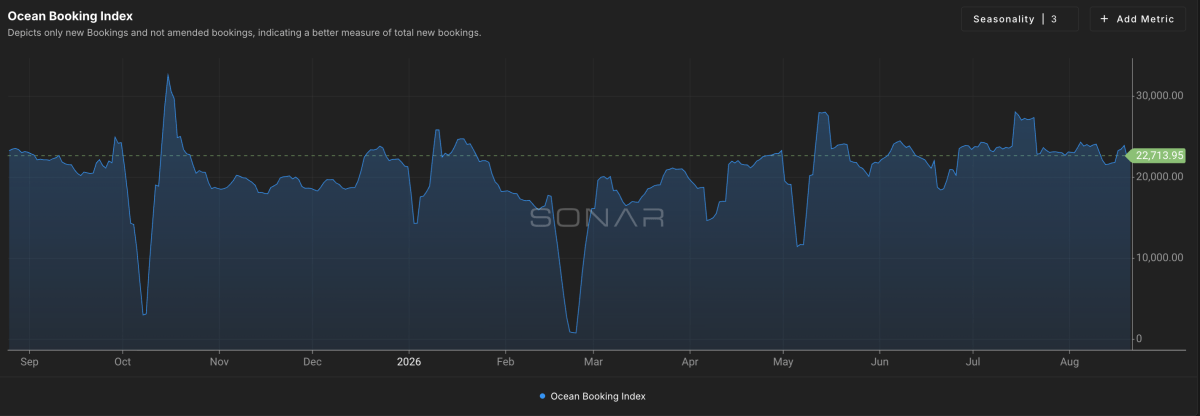
While unfounded fears of higher tariffs helped drive what amounted to unexpected demand by anxious shippers this summer, other assorted geopolitical intrigue is keeping the container market on edge.
Asia-U.S. West Coast prices increased 1% to $6,826 per forty foot equivalent unit (FEU), according to the latest Baltic Index from SONAR data contributor Freightos. Asia-U.S. East Coast prices were 2% higher, at $9,576 per FEU.
Events that could pressure container traffic on the trans-Pacific are being closely watched. The United States is trying to tighten economic sanctions on countries doing business with Iran as the impasse over control of the Strait of Hormuz is about to enter its seventh month.
Tense U.S. trade relations with China could be further tested, although analysts say it’s unlikely Beijing, Iran’s top customer for crude oil, would support the penalties. Still others point to the changing approach by the Trump administration that seems to validate a position on the part of Tehran that it will simply wait out the remainder of the U.S. president’s term.
Mediterranean Shipping Co. has joined other global liners in a return to the southern Red Sea despite a resumption of attacks on vessels by Houthi rebels based in Yemen.
”These steps are sparking some optimism that we are seeing the start of a gradual return to normal levels of container traffic through the waterway,” wrote Freightos (NASDAQ: CRGO) analyst Judah Levine, in a note to clients.
“The concern that the White House would substantially increase tariff levels to close July may have been one factor driving the early start to peak season demand and spiking container rates back in June,” said Levine. “That tariffs remained about level, and that the window until possibly higher tariffs remains open, may help explain the current, surprising, sustained container demand and peak rate levels on the trans-Pacific.”
Rates from Asia to the U.S. West Coast this week ticked up to $7,600 per FEU last seen in early July. That’s about $5,000 higher prior to the start of the peak season in late May. East Coast prices have been steady near $9,000 but have gradually climbed another $800 in August.
Reductions in capacity by carriers, and congestion at major ports in China have also helped support elevated rates in the trans-Pacific. Levine said a trimming of transits by the Panama Canal – and carrier canal surcharges – “could put upward pressure on rates for some Asia -U.S. East Coast services.”
Related Posts


