Freightwaves: VIDEO: Iran attacks refineries; CMA CGM shuts down all cargo bookings to Middle East
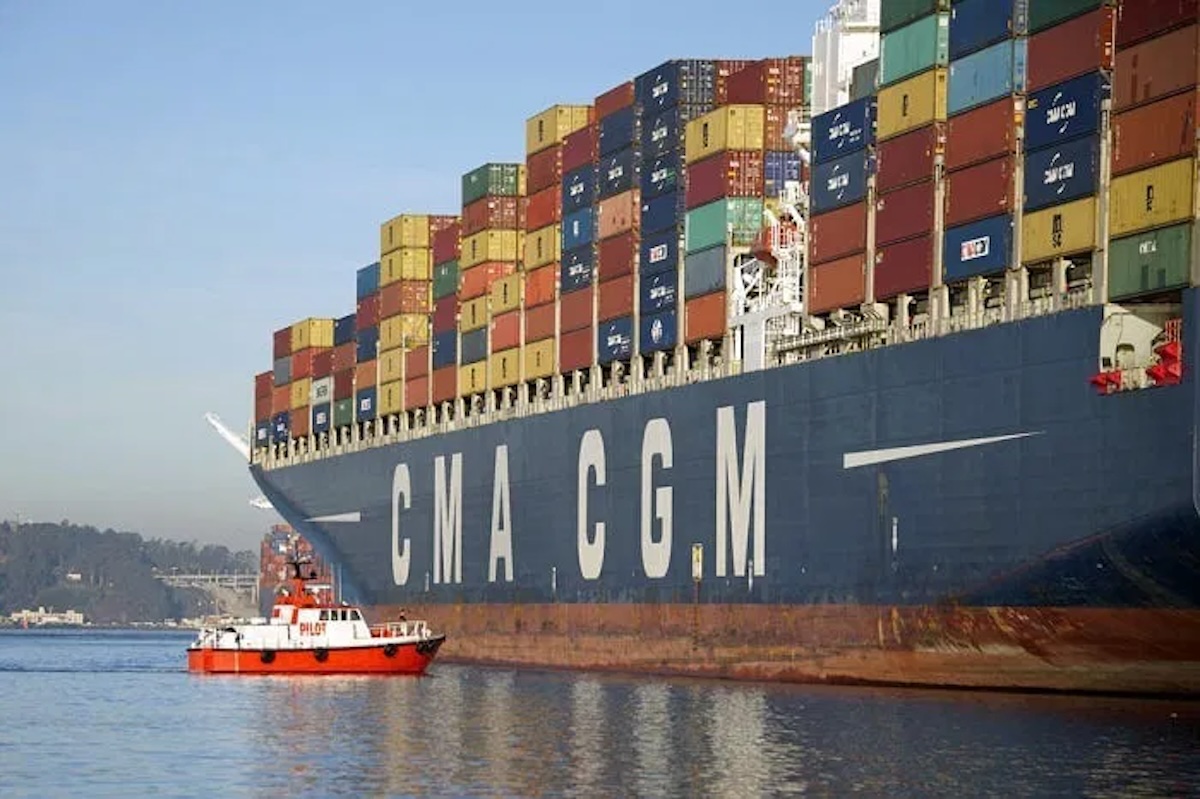
CMA CGM on Tuesday became the latest global container line to suspend all cargo bookings to the Middle East as Iranian attacks brought shipping to a halt in the Persian Gulf.
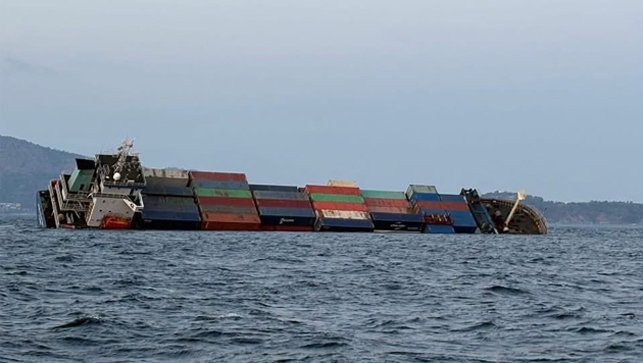
Reports said a half-dozen oil and gas tankers have been damaged in the region. The Athena Nova, a Honduran-flagged bitumen tanker operated out of the United Arab Emirates, was hit by two drones as it attempted to cross the strait and was sinking.
The U.S.-registered tanker Stena Imperative sustained damage when it was hit at the port of Bahrain. No crew were injured, but one shipyard worker was killed and two injured in the attack. The vessel is part of the Maritime Administration’s Tanker Security Program to support international trade and U.S. armed forces.
“In view of the on-going developments in the region, CMA CGM has decided to suspend all bookings with immediate effect,” the liner said in an advisory, “and until further notice for ports of loading/ports of discharge located in the following countries: Bahrain, Kuwait, Qatar, United Arab Emirates (all ports except Fujairah and Khor Fakkan), Saudi Arabia (all ports except Jeddah, King Abdallah Port, Yanbu, NEOM), and Iraq (port of Umm Qasr).”
Maersk (MAERSK-B.CO) and MSC earlier announced their own service changes to the region since the United States and Israel attacked Iran on Saturday. These mostly covered reefer and hazmat shipments. Hapag-Lloyd suspended all transits through the Strait of Hormuz. OOCL advised its vessels to remain 200 nautical miles outside of the waterway.
Maersk said 15 services are affected by the war.
Oil storage tanks in Fujairah, UAE, were targeted, resulting in a fire at the JSW terminal, said Martin Kelly of EOS Risk Group. He said Salalah port in Oman was attacked by unmanned aerial vehicles and Duqm was struck by drones for a second time. Saudi producer Aramco halted production at the Ras Tanura refinery and production of liquefied natural gas was shut down at Ras Lafan.
Published sources said daily charter rates for very large crude carriers rocketed from $151,000 per day in mid-February, highest since 2020, to more than $400,000 within days of the war’s outbreak.
Iran has vowed to cut off all oil shipments from the Persian Gulf, which sees about 20% of global oil shipments move by sea. Iran sells about 80% of its oil to China, and can still move it via pipeline and direct rail.
International Group of P&I Clubs, which insure 90% of global shipping tonnage, reportedly saw some members issue 72-hour cancellations notices for some war risk coverage after reinsurers withdrew backing. That led at least one executive to question the point of paying for war risk coverage in the first place.
Related Posts