Seatrade Maritime: Cancelled sailings pierce New Year optimism

“Early optimism ahead of the Lunar New Year has faded,” according to the maritime consultancy Drewry, which reports that blanked sailings are up from 57 in January to 107 expected in February.
Expectations that there would be an early demand spike ahead of February’s Lunar New Year have been dashed as rates nosedive, demand dwindles and carriers are forced to cut capacity through blanked sailings.
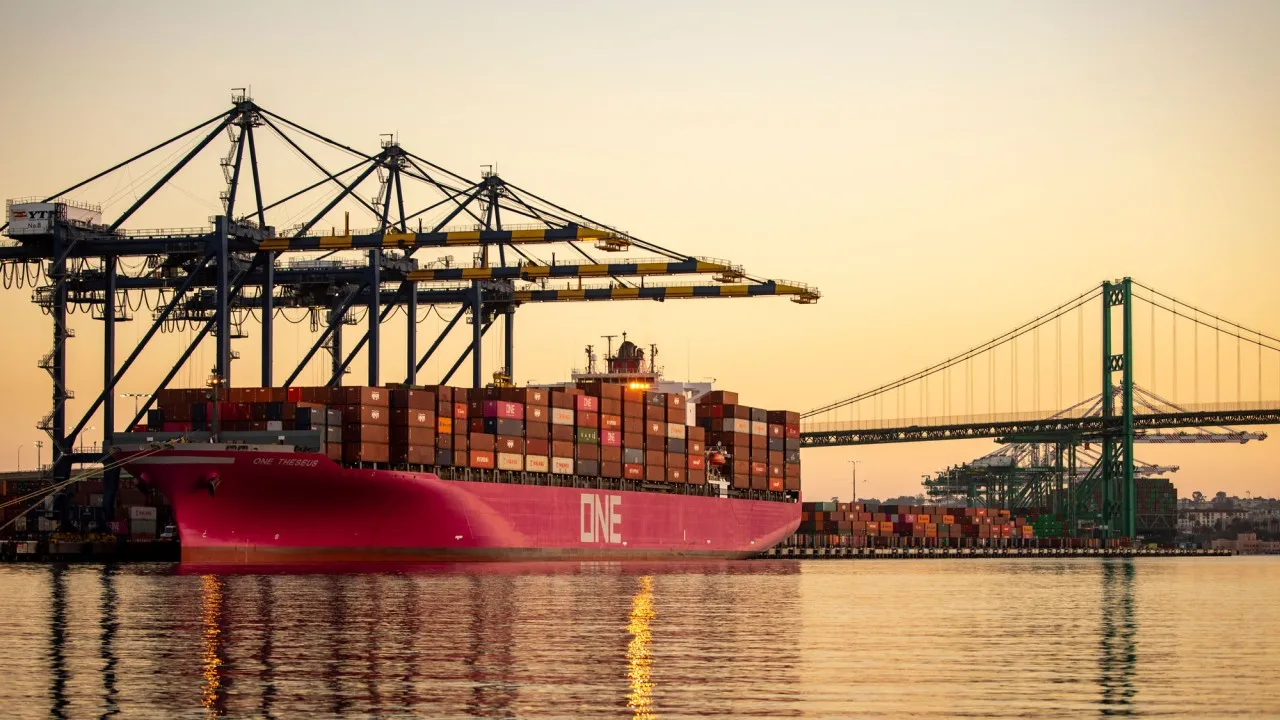
Another indication of the significant downturn in the container market came with the release of Ocean Network Expresses’ third quarter results, to December 2025, with the company recording an $88mn net loss on revenues of $4,074m.
ONE CEO Jeremy Nixon reflecting on the results said the company was navigating a challenging environment.
“Although market dynamics have impacted our performance during the quarter, we remain focused on disciplined capacity management, cost control, and ongoing network optimisation to enhance operational resilience.“
The challenging market dynamics include indifferent production levels, with the global purchase managers Index standing at 50.4 and 50.1 for China, at the end of 2025, with a reading of over 50 indicating growth, and waning US demand appears to have combined with chronic over-capacity to produce a stagnant market.
Meanwhile, Sea Intelligence reports that the latest figures for US inventories, in October last year, are largely stagnant, but argues that there is a discrepancy in the figures with sales up 4% year-on-year while containerised imports have declined 6%.
“It is possible that this discrepancy could partly be explained by timing between the sources, and that the coming US inventory data will show a strong contraction,” said Sea Intelligence.
Manufacturing and inventories are indicators of what to expect in the container shipping sector, spot rates are an indicator of the current position and Drewry is clear on this subject, the WCI is down 5% week on week with the two key trades out of Asia to Europe and the US including the Mediterranean and New York down between 4 and 7%.
Xeneta’s chief analyst Peter Sand was succinct in his summation of the current container market: “Back in December, Xeneta data clearly indicated that carriers were going to ramp up offered capacity in January to capitalise on traditionally stronger demand at the start of the year. That is exactly what has happened on the main trades out of the Far East, but capacity is outweighing demand with the inevitable downward impact on freight rates.”
According to the latest Xeneta data, released yesterday, average spot rates from the Far East to the US West Coast: are $2,312/feu, and US East Coast rates are $3,238/feu. On the Asia to North Europe services average rates declined to $2,673/feu week-on-week, while to the Mediterranean rates are $4,278/feu. On the Atlantic average westbound spot rates are $1,533/feu.
“It looks like the pre-Lunar New Year cargo rush is behind us, so the market is set to turn further in the favour of shippers rather than carriers with further softening freight rates,” said Sand.
Related Posts