Seatrade-Maritime: Container peak season easing, port congestion ties up 10% of fleet

Published by Seatrade-Maritime
DHL Global Forwarding says that the container shipping peak season demand is gradually easing but serious port congestion is maintaining pressure on networks.
The latest Ocean Freight Market Update from DHL Global Forwarding shows a market that is transition with carriers returning to Suez Canal routings, disruption from port congestion in Asia caused by severe weather continuing to cascade through the market, and demand growth for Asian exports which has shifted to secondary trades.
The report said that peak season demand is gradually easing but there a variety of other factors at play keeping up pressure on the market.
Demand growth is pegged at 5% year-to-date led by Asian export growth at 8% year-to-date, and while the peak season is easing 4% year-on-year demand growth in August showed peak season was still not over. “Asian exports [are] growing particularly on secondary trades, as tariffs do not stop but simply shift global trade; while backhaul trades continue weak,” the report said.
The impact of this shift in cargo to secondary trade means is fleet growth from newbuildings and increased capacity as lines switch Asia – Europe/Med and US East Coast services by to a Suez Canal routing does not imply lower rates across the globe.
“Carriers must reposition ships, rebalance schedules and manage services operating across different routings. Ports and inland transport networks then need to absorb those changing arrival patterns,” said Bjoern Schoon, Senior Vice President, Ocean Freight, DHL Global Forwarding Asia Pacific. “The return to the Suez Canal can shorten the sailing. It cannot eliminate the bottlenecks waiting at either end.”
Suez Canal routing is returning to some 60% plus of Asia – Europe services which is releasing capacity into the market due to shorter transits times compared to Cape of Good Hope routing. However, dual routings, congestion and network realignment continue to impact container shipping.
“As of November, Gemini [Maersk and Hapag-Lloyd] and MSC are returning fastest to Suez, with more than half of sailings from Asia to Europe passing through the Suez Canal again; shippers should verify cargo protection coverage,” the report said.
Insurance is a concern for shippers who were urged to check their cargo was fully insured for entire transits and that policies explicitly cover Red Sea transits and war-related risk. It was noted that “there have been cases of carriers changing routing without prior announcement while the vessel was in transit”.
In addition to capacity freed up the return to Suez newbuildings coming into the market over 2026 – 2028 are expected to exceed nominal trade growth, but this may not bring down freight rates as much as might be expected.
“While overall capacity should become more flexible to accommodate demand, trade- and season specific demand will remain subject to limitations as carriers must balance overall volatility. Therefore, fleet growth does not immediately translate into lower rates across the globe,” the report stated.
Meanwhile port congestion is expected to remain a significant bottleneck.
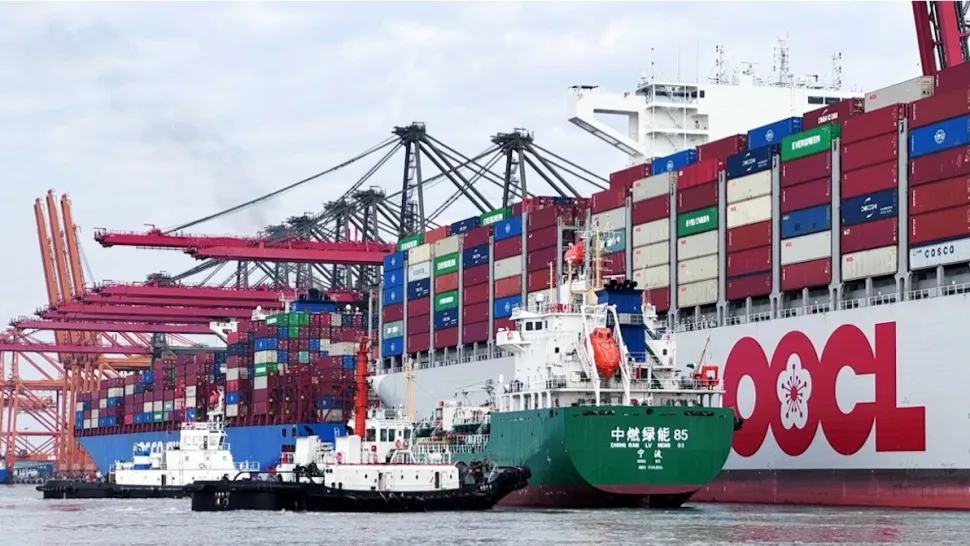
Asian port congestion brought by a series of typhoons disrupting the world’s largest export ports in China during late summer also continues to impact the market. The cascading effect of port congestion in Asia has tied up over 10% plus of the global fleet or equivalent of 3.6 million teu in capacity. While this port congestion is now starting to ease DHL Global Forwarding said it would take months to return to regular levels and landside infrastructure would remain a bottleneck into 2027 and beyond.
Related Posts