Seatrade-Maritime: Cyprus emphasises maritime’s ‘strategic direction’
Published by Seatrade-Maritime
As the Cypriot Presidency of the Council of Europe draws to a close the vision for shipping seen by regulators and the industry appears to be converging.
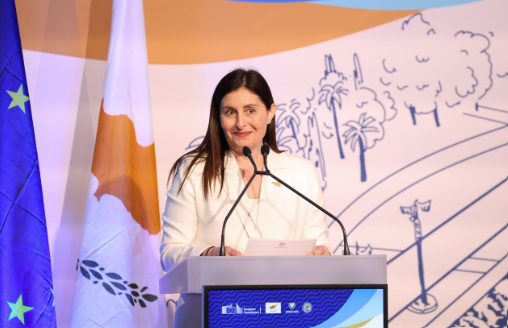
Last week at Posidonia Skaramanga’s VP and CEO Miltiadis Varvitsiotis called for the EU to show the will to support shipping as strategic industry, something that was echoed by Marina Hadjimanolis, Shipping Deputy Minister to the President of the Republic of Cyprus in an interview with Seatrade Maritime News.
She agreed with Varvitsiotis arguing that there was a need to shape a “Forward-looking vision for European shipping,” in a complex global environment.
The Minister said that the launch of the EU Industrial Maritime Strategy was the consequence of a broader strategic debate with a unified EU approach at the IMO. The culmination that work will come next week in Luxembourg when the Council will meet and adopt the strategy.
“The Presidency has consistently worked to project a unified European voice on the global stage, recognising that Europe’s influence depends on its ability to act cohesively,” she said.
It is, however, worth pointing out that the minister had said at last year’s London International Shipping Week that Cyprus was prepared to dissent on the EU’s position on LNG, due to the offshore energy it was hoping to exploit in the future.
Nevertheless, the Commissioner for Sustainable Transport and Tourism, Apostolos Tzitzikostas, said in March: “With our EU Ports and Industrial Maritime Strategies, we are equipping Europe’s ports, shipping and shipbuilding sectors to lead the clean energy transition, secure trade and defence, and remain globally competitive.”
Another signal that regulators and industry is converging came at a HHX.blue seminar at Posidonia with panellist Gavin Allwright telling the audience that while shipping is very good at tactical decisions it was necessary to act strategically and collectively.
“If you’re doing a strategic alignment, you need to look at 2050,” said Allwright and work backwards. “I have not heard anybody in the industry that’s told me what the fleet, a robust, profitable, clean fleet, what that looks like in 2050?”
Financing the transition was another issue raised, in particular where this money would come from, with the strategy looking at using EU, national and private investment as well as funds from the EU ETS to finance innovation and development.
It remains unclear whether national and EU funding would contravene European state aid regulations.
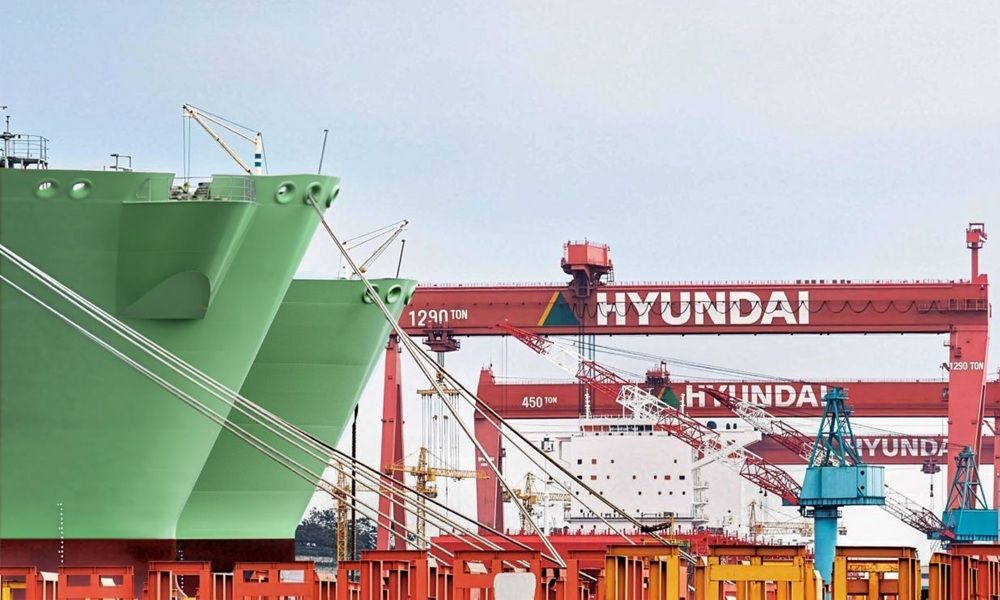
In a more specific response, the Minister pointed to the policy that directly addressed Varvitsiotis’ major concerns about the depletion of shipbuilding in Europe. This included the Shipyards of the Future initiative and the European Maritime Value Chains Alliance, with targeted financial tools to modernise and digitalise yards.
The Minister added that the EU will continue to push for fairer competition globally that will ensure European companies are not at a competitive disadvantage.
In addition: “Smarter regulation, simplifying procedures where possible, improving permitting frameworks, and ensuring that our legislation is predictable, fit-for-purpose and aligned with international developments,” will allow European yards compete with international players.
“The message is clear,” said Hadjimanolis, “Europe is not stepping back—on the contrary, we are stepping up, to ensure that our shipyards remain competitive, innovative and firmly positioned at the heart of the global maritime sector.”
Another key achievement for the Cyprus Presidency has been to unite member states, institutions and industry around a shared strategic direction, putting resilience, competitiveness and the workforce at the centre of solutions explained Hadjimanolis.
April’s Lefkosia Declaration is seen by the minister as a “defining moment” of the country’s presidency.
According to the minister the Lefkosia Declaration was the EU’s response to “pressing structural challenges” in the industry namely the shortage of skilled seafarers, demographic shifts, safety risks, and the under-representation of women.
Just as important has been translating the vision into “tangible engagement” with a series of targeted conferences in Cyprus and Belgium.
“We created platforms for substantive dialogue among policymakers, industry leaders and international partners. These exchanges helped to build consensus, strengthen partnerships and elevate the visibility of European shipping at a critical moment for the sector,” claimed Hadjimanolis.
Related Posts