Seatrade-Maritime: DNV revises down hydrogen outlook
Published by Seatrade-Maritime
The maritime industry is expected to remain a primary driver of clean hydrogen uptake through 2060, accounting for around 15% of uptake, but the overall picture for hydrogen has softened in recent years, according to a new DNV report.
“The hydrogen industry is poised for growth, but it is a fragile stance. Hydrogen completes the most difficult aspects of the decarbonisation drive that so many nations have committed to. In driving fossil dependency out of critical sectors, hydrogen also contributes meaningfully to energy security. It is time for policymakers to study carefully the practical progress that has been made and to act decisively,” said Ditlev Engel, CEO, energy systems at DNV.
According to the Energy Transition Outlook Hydrogen to 2060 report, there has been a persistent gap between the development of ambitious hydrogen policies and the implementation of those policies. Optimism around hydrogen’s role in the energy transition early this decade has given way to a more realistic understanding of the complexity of clean hydrogen chains and the continued need for policy and regulatory support.
A “precarious” geopolitical environment is among the reasons for delays affecting clean hydrogen development, said DNV, along with high electricity costs and industrial protectionism. The US has all but eliminated its green hydrogen funding in pursuit of energy dominance, while Europe has put limits on Chinese components in electrolysers to protect its own clean energy industries.
Further policy challenges arise from the nature of future off-takers — hard to abate industries. As these industries are often difficult to electrify and exposed to international competition, policy makers seem reluctant to threaten their competitiveness with hydrogen uptake requirements.
“Support measures have, so far, overwhelmingly been concentrated on the supply-side with government incentives aiming to promote early-stage supply capacity and narrow the cost gap with fossil fuels,” the report said.
Demand drivers
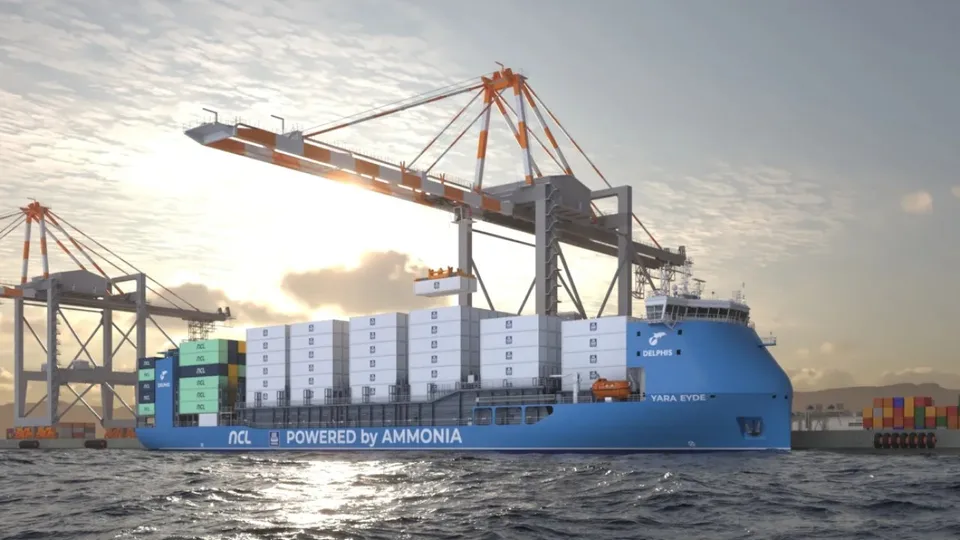
Along with aviation, the maritime industry is identified as a demand driver for clean hydrogen in DNV’s outlook, almost exclusively through use in derivative fuels such as ammonia and methanol, rather than hydrogen as a fuel. Hydrogen’s low volumetric energy density restricts its suitability for use as a marine fuel, but e-methanol is expected to lead as the early uptake option among hydrogen-derived fuels, while ammonia will become a preferred long-term option in shipping’s future fuel mix.
“Methanol experiences earlier uptake due to easier handling and retrofitting, while ammonia becomes dominant later as a carbon-free fuel at scale. E-methanol will scale based on the availability of biogenic and atmospheric sourced CO2,” the report said.
The class society expects slow initial growth for ammonia and e-fuels, with an acceleration after the mid-2030s as regulation, fleet turnover and fuel availability barriers ease.
Bio-energy, nuclear, electric, natural gas and oil sit alongside hydrogen, ammonia and methanol in DNV’s 2060 fuel landscape.
In transportation, carbon pricing and fuel standards will be required in order to bridge the gap between clean hydrogen-derived fuels and fossil fuels and support commercial viability.
“DNV has revised down its mid-century hydrogen outlook by 35% since our previous hydrogen forecast in 2022 primarily due to a lack of policy support which has led to early ambition failing to convert to large-scale projects. The forecast also reflects continued progress in electrification technologies, which has reduced hydrogen’s role in some sectors previously expected to adopt it,” the class society said.
Download the Energy Transition Outlook Hydrogen to 2060 report from DNV.
Related Posts