Seatrade Maritime: Equipment and certification failures implicated in UK pilot death
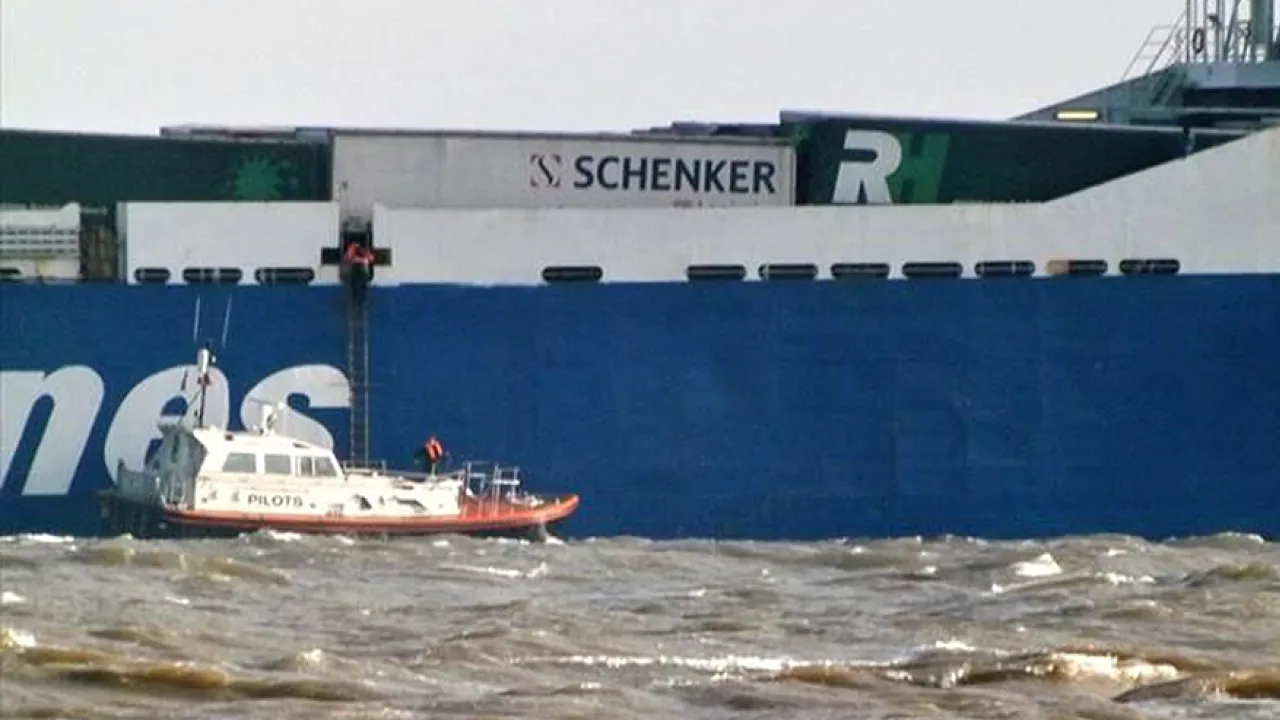
An investigation into the 2023 death of a pilot while attempting to board a ro-ro vessel off the UK uncovered a litany of operational and procedural factors that may have contributed to the fatality.
The UK Marine Accident Investigation Branch (MAIB) has published its report into the death of the pilot, who “likely suffered a cardiac event” while attempting to board Finnlines’ 2001-built, 168m ro-ro ship Finnhawk from pilot vessel Humber Saturn on 8 January, 2023 during the approach to the Humber Estuary on the UK’s east coast.
According to the report, the pilot let go of the ladder without warning, falling 2 – 2.5 meters and sustaining fractured vertebrae as he landed on the deckhouse and safety rail of Humber Saturn before falling overboard.
The pilot could not be recovered from the water as the vessel’s man overboard recovery platform could not be raised and a secondary means of recovery was not available. The pilot was left half-immersed in the cold seawater wearing thin trousers, a jacket and shirt — insufficient to protect against sudden cold water immersion — until a lifeboat arrived 40 minutes later. The prolonged time on the partially-submerged recovery platform “significantly reduced his chance of survival,” the report said.
MAIB said the seafarer should not have been declared fully fit for duty when his medical certificate was issued six months earlier as he suffered from multiple chronic health conditions that may have affected his ability to carry out his duties. Proper assessment would probably have led to the pilot being declared temporarily medically unfit, or fit only for restricted sea service, MAIB said. An indirect contributing factor was the Approved Doctor’s lack of access to Maritime and Coastguard Agency (MCA) digital medical records from the pilot’s previous assessments, the report said, an issue that has since been rectified with the MCA’s introduction of the Approved Doctors Information System.
The investigation found that the port authority had not health assessed the physical capabilities required of its pilots to an occupational standard for the role. Without this standard in place, a balanced opinion on the pilot’s fitness for work could not be provided on the several occasions he was referred to occupational health by his line managers.
On the day, the pilot’s colleagues raised concerns about the pilot’s fitness before he boarded the pilot vessel and attempted to dissuade him from working. It was found that ABP empowers its employees to stop work to prevent an unsafe act, but the pilot’s symptoms on the day did not point to an imminent cardiac event. Timely and sensible interventions were made by colleagues to stop the pilot boarding Finnhawk, but it was ultimately unclear whether colleagues would have had the confidence to step in and prevent the pilot from working if his symptoms had been worse, an intervention that would have required overriding the authority of an older, experienced, long-serving pilot.
MAIB said the incident underlines the need for a discussion on the positioning of the pilot vessel during the pilot’s climb, as positioning the vessel beneath the ladder can significantly increase the risk of injury in the event of a fall when compared to dropping directly into the water.
While in this instance the pilot fell unconscious and was unable to assist in his own rescue, the report noted that another UK port group had carried out pilot-specific training on sea survival and the risks of pilot embarkation and disembarkation. ABP Humber pilots had not received training in sea survival, first aid, and CPR, despite the guidance contained in the IMO and Boarding Landing Code for harbour authorities.
The man overboard recovery system had been tested as per regulations, but had regular and recurring defects. As the equipment was not identified as critical safety equipment, the impact of these defects on the availability of the system in an emergency was not considered.
Action taken since incident
ABP has reviewed its medical standards for pilots and introduced an enhanced occupational medical assessment of the pilot’s fitness, mandatory system for new hires and voluntary for existing pilots.
After a review of its man overboard recovery systems on its pilot vessels, ABP has provided all pilot vessels with an additional manually-operated recovery cradle for redundancy.
MAIB issued a recommendation to MCA to update guidance to include the need for non-SOLAS vessels to have an alternative means to recover an unconscious person from the water. A recommendation was made to ABP to risk assess its pilots’ PPE and improve where necessary to enhance pilot survivability in cold water.
The chief inspector of marine accidents, Andrew Moll OBE, said: “While superficially this was a simple accident, our investigation identified safety concerns across the training, equipment, medical standards and emergency response, and this report addresses all of these.
“While the MAIB has been encouraged by the actions of the port and industry bodies to address these safety issues, I strongly urge all harbour authorities with a pilotage service to learn the lessons of this accident and take action.”
Finnhawk has since been renamed Bahía Cargo and is owned by Fred Olsen, serving the Canary Islands under its Cargo Express brand.
Related Posts