Seatrade-Maritime: Intra-Asian container carriers buck income gloom
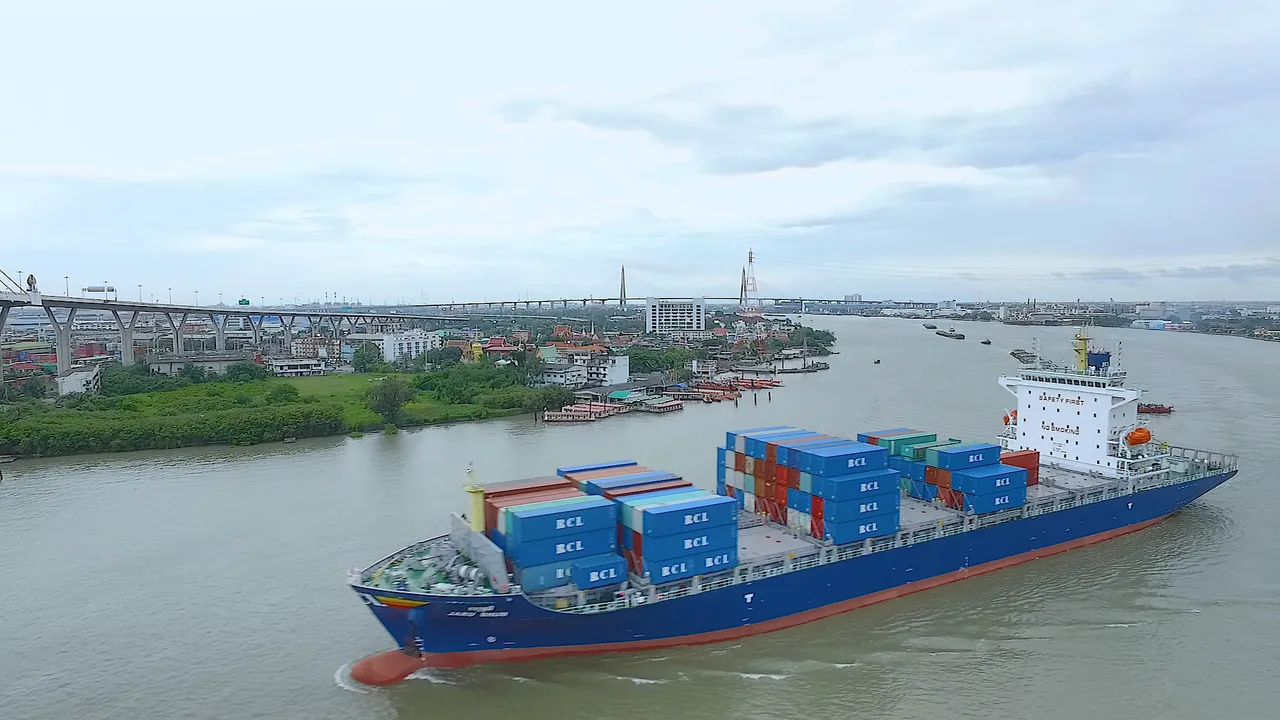
In what appears to be an end to the ‘supercycle’ that has seen the world’s top ten carriers rake in billions of dollars since the beginning of the decade, Asian carriers have enjoyed a boost to their income.
Cosco Shipping, SITC and RCL have all posted rising profits in the Asian region while global players’ incomes have fallen since 2022, apart from a minor recovery in 2024, when the Red Sea crisis saw operators divert vessels around the Cape of Good Hope.
That respite has seemingly been exhausted as new capacity and US tariffs hit demand dealing the old one-two jab to carrier profits.
In this week’s market review Alphaliner reports that Cosco saw its EBIT decline from 26.4% in Q1 last year, to just 9.2% by Q4, while the Group’s profits fell 41% year-on-year to $4.3 billion, “after receiving a major boost from domestic and intra-Asia activities”.
“While revenues fell on nearly all routes, Cosco saw a 12% rise in earnings on its Mainland China activities. By contrast, revenues on the Transpacific and Asia-Europe both fell 17%,” said Alphaliner.
Hong Kong-based SITC, described as an intra-Asia specialist, saw profits soar 20% in 2025, as average rates increased from $721 per teu to $753 per teu and volumes increased from 3.57 million teu to 3.85 million teu.
“During the year, SITC launched new services from China to and between India, the Philippines, Indonesia, Thailand, Vietnam, including a self-operated direct service from north China to East India,” noted Alphaliner.
Other intra-Asia operators did not fair so well as extraordinary circumstances, rather than cargo volumes or freight rates hit their incomes.
Another Hong Kong carrier, TS Lines saw its profits fall 10% year-on-year to $329 million following the termination of its Asia to US West Coast service, with the carrier now concentrating on Asia-Pacific routes, including the Red Sea and the Middle East, with Mexico its only trans-continental service.
Regional Container Lines’ $906 million 2025 profits represent an 11% fall on the previous year, and Alphaliner said the Thai line’s profit decline was “due mainly to appreciation in the Thai Baht”.
Alphaliner reported that RCL’s freight income was up 5.2% for the carrier in 2025.
“Growth”, however, “Was mainly attributable to improved fleet efficiency and the expansion of the company’s service network, which enabled a higher total lifting of 215,547 teu, up 8.8% year-on -year.”
In contrast the top nine container shipping lines saw EBIT decline sharply. “In total, the top nine carriers generated operating profits of $13.9 billion for 2025, down from $32.6 billion in 2024. Results remain well above the decade-average prior to COVID however, and show that container shipping remains in a very profitable supercycle.”
While Alphaliner asserts that the container shipping industry remains profitable, it is questionable whether the carriers can be said to be in a “supercycle”, given that the consultant’s own data shows that profits have been trending downwards since 2022.
Had the Red Sea diversions not occurred it is possible that many lines would already be in the red. As it stands, only Maersk, Yang Ming and Ocean Network Express (ONE) recorded EBIT losses in Q4 of last year, but all the lines saw EBIT fall substantially from Q1 to Q4.
Data for CMA CGM, which does not report EBIT and MSC, which does not release profit and loss figures are not included in Alphaliner’s data.
Related Posts