Seatrade Maritime: ISS enters Zim’s boardroom battle
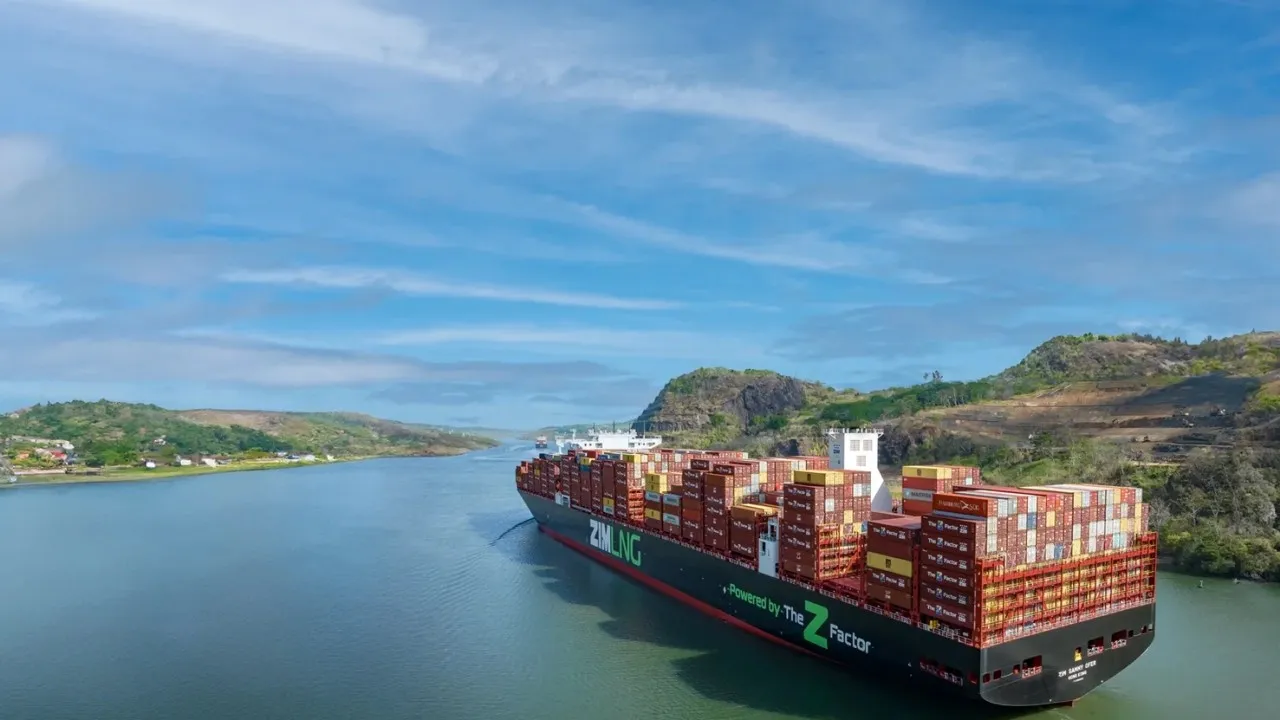
New York-listed carrier Zim Integrated Shipping Services has seen its share price nearly double since mid-October as the battle for control of the company hots up.
Zim’s annual general meeting, at which the board will be approved, has been delayed by a week and will now take place on 26 December. Investor advisory company Institutional Shareholder Services (ISS) has entered the fray, urging shareholders to vote for the eight existing directors, over the three nominated by dissident shareholders.
As the boardroom battle lines are being drawn, the company’s share price has also shifted, nearly doubling from a mid-October low of $12.44 to a high of $20.08 at the close of trading on 8 December.
According to ISS: “Since its IPO, [in January 2021] ZIM has delivered peer-leading total shareholder returns through its commitment to focused execution, an agile operating strategy, disciplined capital allocation and strong governance.”
The proposed changes to the board supported by dissident shareholders do not offer “sufficient rationale” for a change, nor are the candidates experienced in the maritime industry, and there has been “no attempt to work constructively with the board,” said ISS, adding that there have not been any “suggestions for improving the company’s business”.
Since president Donald Trump’s inauguration this year, however, demand for container shipping has oscillated between boom and bust, with the outlook for 2026 now expected to decline further.
A look at this year’s share prices fluctuations reveals a chart that shifts roughly in line with the US imposition and pausing of import taxes with the share price declining as tariffs take hold, then rising as they are delayed, providing a temporary boost to demand, before again subsiding.
Zim’s concentration on US services means that the carrier is vulnerable to the fluctuations to consumer demand there, which over the first half of this decade has proved particularly lucrative.
According to MDS Transmodal data, more than a third of Zim’s 605,564 teu of capacity on a monthly basis, or just under 230,000 teu, calls at US ports. There are another 104,523 slots on Asia/Europe services including 19,000 teu on the ZCA service that calls in Europe, North America and Latin America, together these trades account for over half of Zim’s slots. The remainder includes Goldstar Line services to Latin America, Africa and Intra-Asia.
Meanwhile, Linerlytica reported today that November port volume data has seen transpacific volumes decline 4.6% year-on-year, and warned that spot rates are heading for lows of $1,500/feu with “volumes expected to remain weak over the next 12 months”.
Month-on-month spot rate fluctuations on the Pacific trades shows an overall 32% decline, $50/feu according to Xeneta, with chief analyst Peter Sand commenting: “Shippers should reflect on this weaker market the next time a carrier asks for a general rate increase (GRI), because it would not appear to be justified against the level of demand versus capacity.”
With such an uncertain outlook it would seem to be a tough time to sell a shipping line. Dynamar analyst Darron Wadey points out in a recent comment that Zim is a “de facto” position as a national carrier, which, along with its asset light strategy — most of its vessels are chartered — could mean other carriers are less interested.
“For a carrier of its size, ZIM plus its Gold star Line subsidiary have always had a fairly widespread – yet shallow – service network,” said Wadey who added that its slot agreements added to the carrier’s network. “It could also be that this network of services, supporting offices and people is where the value in ZIM lies, although whether carriers the magnitude of Maersk and MSC would gain anything from that, is also a question.”
The current share price values the carrier at more than $2.4bn, an increase of over $900m on the October valuation.
The ISS recommended Board is: Yair Seroussi (current Chairman of the Board); Nir Epstein; Birger Johannes Meyer-Gloeckner; William (Bill) Shaul; Yoram Turbowicz; Yair Avidan; Liat Tennenholtz; and Anita Odedra.
The three dissident nominee’s are: Keren Bar-Hava; Ron Hadassi; and Ran Gritzerstein.
Related Posts