Seatrade Maritime: London Gateway broke 3m teu barrier in 2025
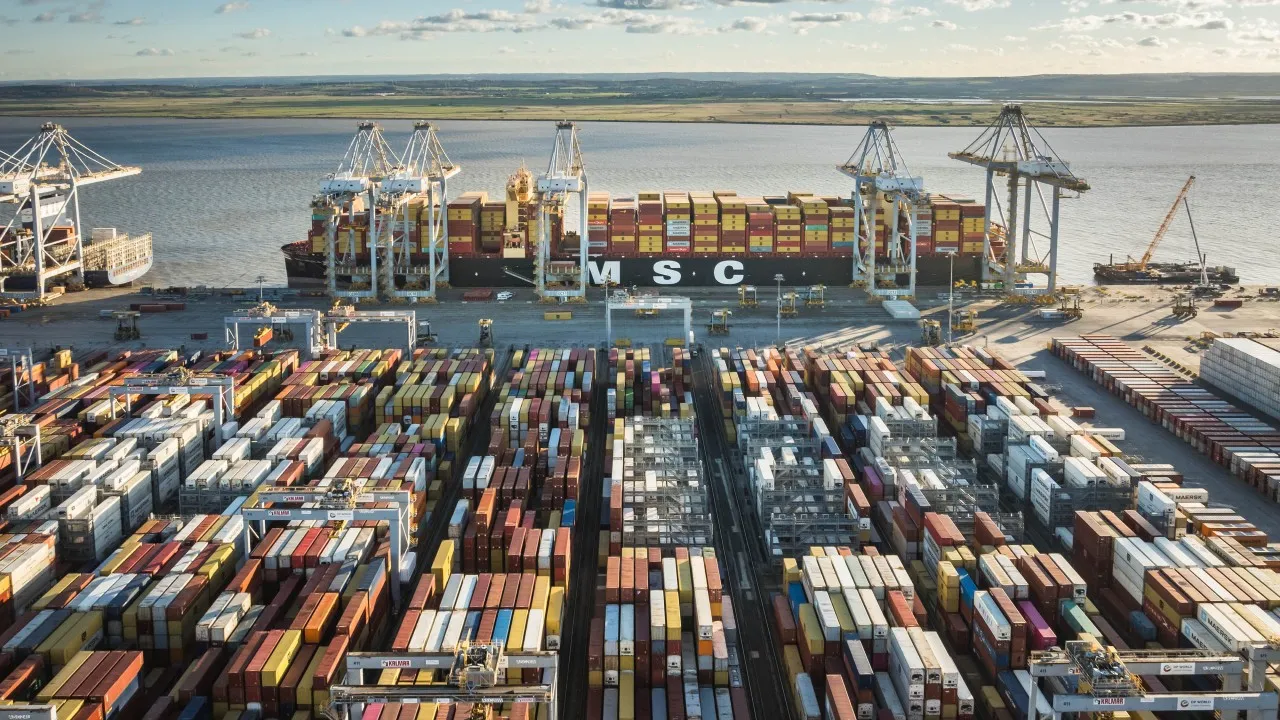
DP World announced a 52% increase in container handling at its London Gateway port in 2025, moving more than 3m teu in the first full year of operations for its all-electric berth four at the UK port.
Volumes were further supported by the addition of new Asia-Europe route calls from the Gemini Cooperation, the alliance between container lines Maersk and Hapag-Lloyd, it added.
The port operator said that its Southampton terminal handled more than 2m teu last year, which means its two locations handled more than 5m teu. According to UK Government statistics, the nation’s 2024 total container throughput was 9.62m teu and Felixstowe was the largest contributor with 3.6m teu handled.
DP World has made no secret of its intention to take the UK container port crown from Felixstowe, which is currently owned by Hutchison Ports but is part of the delayed sale of the Chinese giant’s port assets to Blackrock and MSC’s Terminal Investment Limited (TiL). DP World said in 2024 that it planned to take the top spot within five years.
As Felixstowe’s future is clouded by the complex global deal, construction has started at London Gateway on two more all-electric berths as part of a £1bn investment in the port. Construction on berths five and six began in May 2025 year and was scheduled to take four years to complete.
A second rail terminal also came online at London Gateway last year, and a Boxbay container handling system is set to be deployed there in the coming years.
DP World’s Southampton terminal is receiving its own investment, with the first new quay crane set to be delivered this year under a £60m investment in the tallest quay crane fleet in Europe.
Stephen Whittingham, executive vice president – North Europe at DP World, said: “Surpassing five million teu at our UK terminals demonstrates how investment in capacity, technology and resilience is allowing DP World to move goods more reliably, sustainably and efficiently from ship to shop, continuing to raise the standard for end‑to‑end logistics.”
Related Posts