Seatrade-Maritime: Middle East conflict to redesign container trade flows
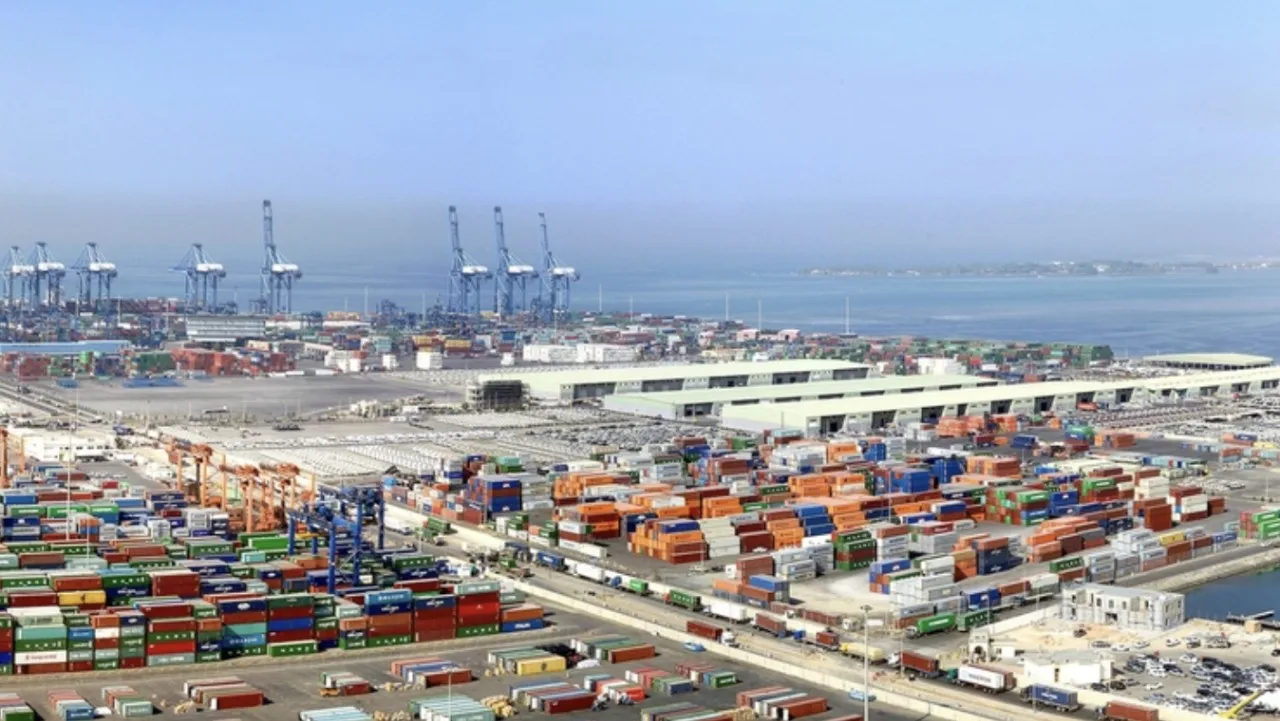
Container lines moved quickly to ensure continued trade into the Arabian Gulf, a critical region heavily dependent on imports of consumables, machinery, and construction equipment, Drewry analysis has revealed. And so far, supply chains are proving remarkably resilient even though shippers must take each day as it comes.
But liner experts at the shipping consultant believe that the Middle East conflict will generate major and permanent shifts in routings which will become more complex and more expensive. There are various drivers, but expensive war risk insurance is an immediate concern.
Carriers will seek to reduce their dependence on major hub ports in the Gulf, opting instead for new locations within striking distance but outside the Gulf. Options may include multi-modal corridors and mini-land bridges, said Drewry’s Simon Heaney yesterday.
Heaney, the research firm’s Senior Manager of Container Research, noted that liner networks had already shifted to become more risk-averse. A direct result of the conflict will be their more fundamental redesign to avoid choke points such as the Strait of Hormuz, the Bab el-Mandeb Strait, and the Suez Canal. Tomorrow’s networks will be designed to minimise the risk of any significant disruption, he said, but they are likely to prove more complex and more expensive.
There will be winners and losers in the process and significant potential for new investment, noted Philip Damas, Managing Director of Drewry Supply Chain Advisors. Gulf Cooperation Council countries, he said, should proceed with the east-west landbridge corridor linking Gulf states with the Red Sea as soon as possible.
The port of Jeddah, which has grown its capacity steadily over the last two decades, could be a major beneficiary. On the other hand, major terminals in the Gulf ports of Dubai, Abu Dhabi and Saudi Arabia may shed business.
Ports elsewhere in the wider region could benefit. Aqaba could prove to be an interesting option. So too could terminals in Turkey.
In Asian trades, the Suez Canal may well suffer lower volumes in a shift towards longer but less risky voyages round the Cape of Good Hope. Whereas this has been a temporary strategy so far, it could well become a more permanent adjustment, the Drewry analysts believe. For shippers, this will mean longer transit times and higher costs.
More immediately, spot rates from China to Jebel Ali are up by a factor of three or four but less than those that occurred during Covid. However, the focus has shifted from price to safety and shippers must contend with extended transit times.
On tonnage supply, soaring fuel costs are cutting service speeds. Oil and bunker prices are likely to remain elevated, some say permanently. However, the reduction in shipping capacity could provide a driver for more ship contracting in the medium term.
Global container volumes have not collapsed, the analysts concluded, but structural vulnerabilities are likely to lead to lasting changes in networks and frequencies.
Related Posts