Seatrade Maritime: NTSB Dali report adds impetus to ISM Code revamp
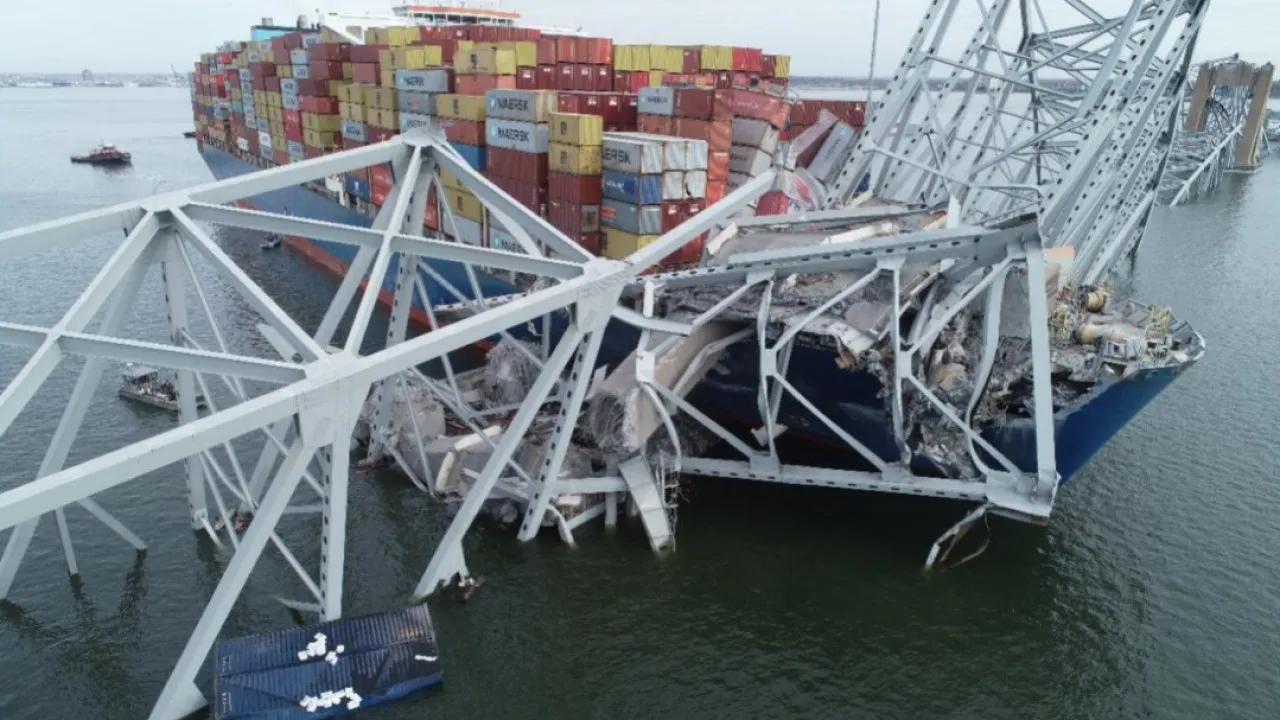
“There’s an element of the Dali failures in every ship” according to master mariners that are campaigning for the modernisation of the International Shipmanagement Codes (ISM Codes).
Former commercial vessel captains Naveen Singhal, an ISM Code expert and Man Mohan Saggi, who was Nautical Advisor to the Indian Government for more than 50 years, have identified key elements of the ISM Code that they say must be revised in order to protect seafarers and the environment.
Captain Singhal told Seatrade Maritime News that the lack of accountability for shipowners along with sub-standard practices, with rapidly developing technological changes and competition between flag states have led to a “farcical” situation where the codes are ignored and maritime safety has suffered.
“All merchant ships like the Dali are run like mules,” explained Capt Singhal, adding, “We must not let the deaths of the six workmen on the Francis Scott Key Bridge be wasted, we must use the lessons to improve safety and the ISM code.”
Following its investigation into the Dali accident, which saw Baltimore’s Francis Scott Key Bridge demolished after the vessel lost power in March last year, the National Transport Safety Board (NTSB) reported earlier this month that with technology rapidly developing the ISM Code must be proactive in keeping up to date with these changes.
Competitive practices, including flag states overlooking manning guidelines and owners pressurising ship managers have further raised concerns according to Capt Singhal.
According to Capt Singhal the current structure of ISM Code places the responsibility for ship operations on the entity holding the Document of Compliance, and that is normally the ship manager.
He added, however, that, “The responsibility of a Ship Management company does not come with the corresponding authority to allocate or spend resources for the ship’s safe operation. Often, ship owners tend to delay, defer, deter, and dilute expenses related to safety.”
As a remedy the proposals currently under scrutiny by the Indian registry and one other flag state would require the codes to explicitly define a shipowner’s responsibilities with regard to the operation of the ship.
Currently owners effectively hold ship management companies to ransom in what is a competitive market, with the threat of swapping ship manager if vessels are delayed, including if chief engineers are granted lay-up time, normally 2.5 days a month, for maintenance, said Singhal.
Flag states are not immune to owner pressure either according to the proposals, with vessel registers competing for tonnage enforcement of crewing regulations has been passed on to the master and ship manager leading to failures in safe crewing levels.
“By not amending [rule] A.1047(27) [IMO safe manning resolution] and instead amending ISM element 6.2.2 in 2015, the flag state has conveniently shifted the responsibility of increasing crew manning on a ship to the company and/or the master, fully aware that this is likely an impossible task for a master and a ship management company, in an ecosystem where the ship owner is heavily focused on cutting costs.”
Capt Singhal believes the safety management systems procedures and check lists “have become a farce”.
He said: “A few thousand pages of SMS junk, meant to demonstrate compliance, sit gathering dust—neither read by the author, who remains anonymous, as most of the text is borrowed. If that isn’t enough, excessive, cumbersome paperwork, irrelevant checklists, and procedures—neither pertinent nor specific to the ship’s hardware—choke the conscience of the seafarer.”
The owners of the Dali claimed to have no knowledge of the condition of the vessel’s machinery and equipment, having shifted all responsibility for their vessel onto the master and ship management company that they employ.
According to Capt Singhal the NTSB’s Dali report had 17 recommendations, one of which was a proposal to revise the ISM code that will require “an effective safety management system”.
“This is based on the NTSB’s conclusion that the ISM code concentrates more on compliance than on safety standards. It overlooks safety policy, safety risk management, safety assurance, and safety promotion,” said Capt Singhal.
Related Posts