Seatrade-Maritime: OOCL’s profits and revenues decline in 2025
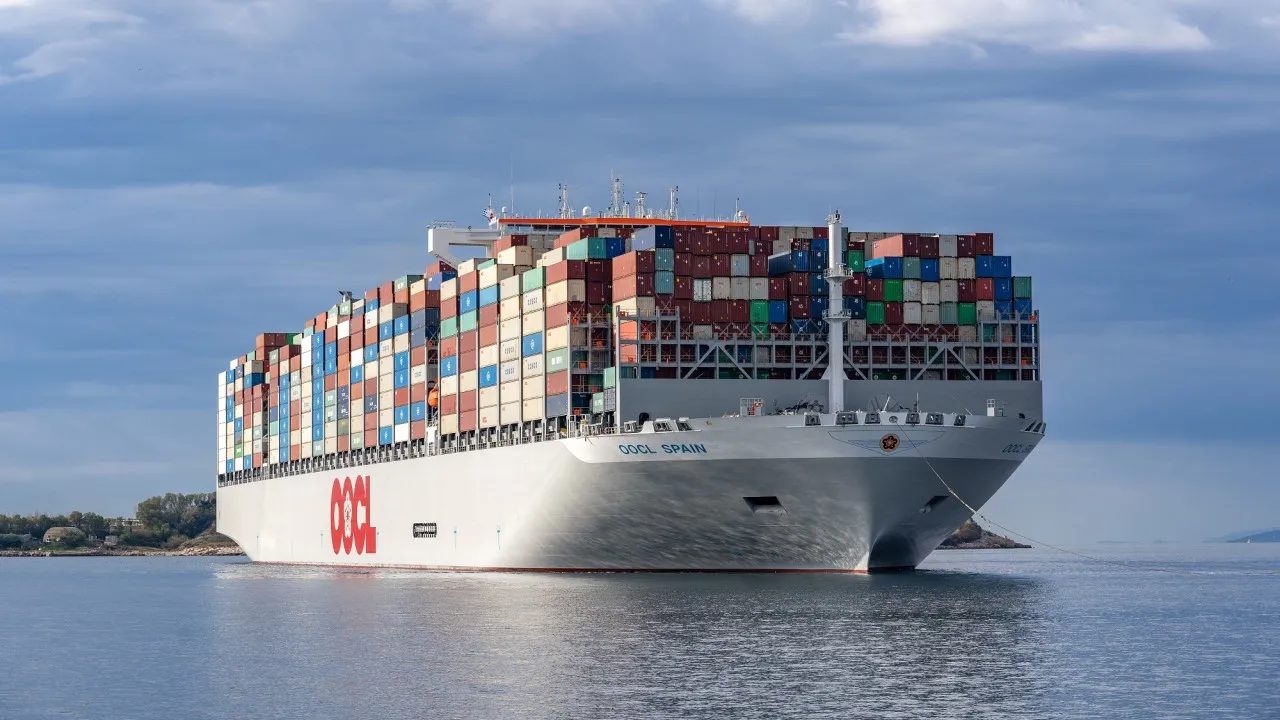
OOCL reported its 2025 financial results, with revenue falling 9.2% to $9.7 billion while net profit stood at $1.52 billion, a decrease of 41.2%.
As noted by OOCL, the global economy remained highly uncertain in 2025 amid unstable policies and shifting regulatory environments. Tariff policies and trade fairs continued to weigh on the container shipping sector, especially the Transpacific trade, resulting in significant swings in cargo volumes and freight rates.
Despite slower global economic growth in 2025, emerging regions including Africa, South Asia and Southeast Asia sustained robust expansion. This trend may stem from restructuring trade routes, stronger domestic demand, or delayed spillover effects from major economies. In response, shipping lines have accelerated network reconfiguration and capacity deployment to capture these growth opportunities.
Looking at the current year, the company said: “As we entered 2026, some carriers have at one point routed certain services or vessels through the Red Sea, and new vessel deliveries continue to increase. Concerns over excess capacity have resurfaced, yet the charter market remains exceptionally tight with vessels in extremely short supply, and changes in the Middle East situation have added further uncertainty to future market developments.”
Facing a fast-changing market, OOCL is enhancing its core East-West trade lanes while adapting to new trade flows, expanding investments in emerging markets, and building a more balanced global network to reduce regional risks.
In 2025, OOCL took delivery of nine new 16,828 teu container ships, completing the full delivery and entry into service of its 16,828 teu newbuilding series. These vessels have not only enhanced the company’s competitiveness on the Transpacific trade, but also provided the additional capacity to reinstate the Asia-Europe LL3 service, which had been suspended earlier due to capacity constraints.
OOCL will add further new vessels to its fleet this year, including the long-awaited 24,000 teu methanol dual-fuel container ships and 13,580 teu conventional fuel vessels chartered from subsidiaries of Seaspan Corporation.
Related Posts