Seatrade Maritime: Premier Alliance quietly shifting to hub and spoke network
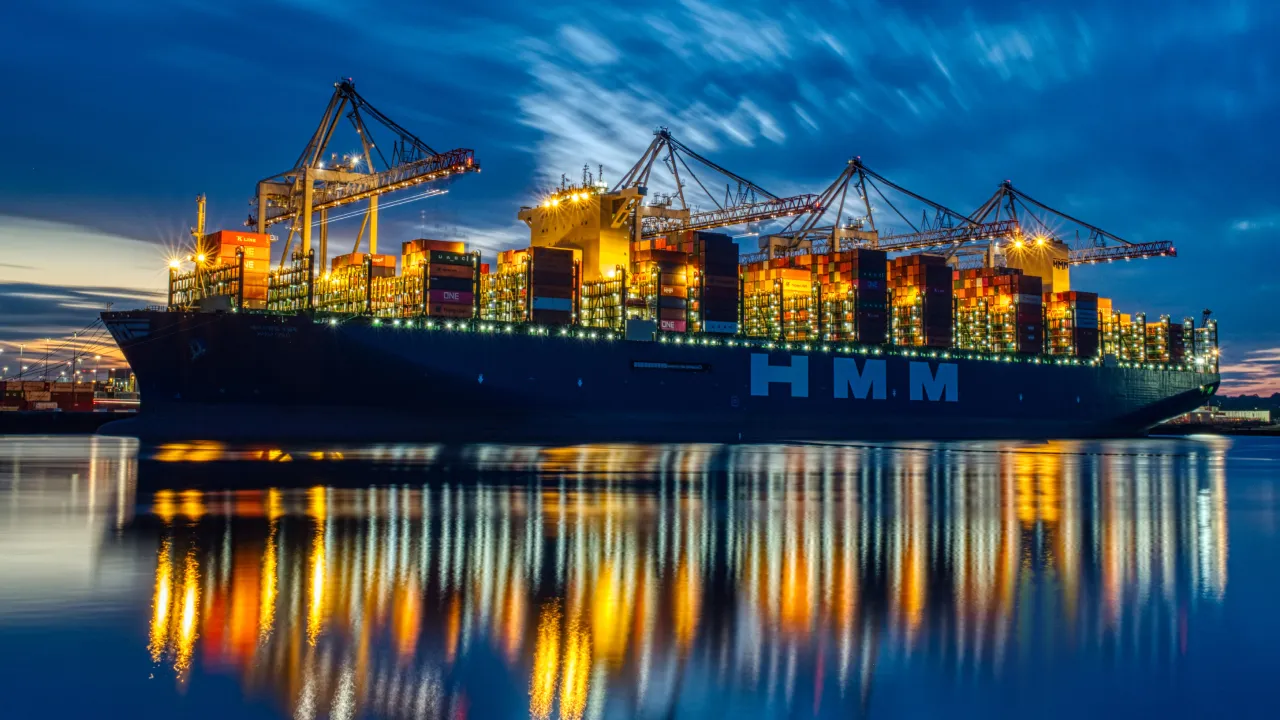
Premier Alliance comprising Ocean Network Express, Yang Ming, and HMM, is looking to shift to a service offering that improves reliability with a concentration of calls in key hubs.
Chief analyst at Xeneta Peter Sand told Seatrade Maritime News that the carriers are “streamlining” service offerings in an attempt to improve the very poor reliability.
“New service updates will see the alliance call at more ports directly, so it looks more like a hub and spoke network without actually being it,” said Sand, “They are looking to bridge the gap to service level improvements because schedule reliability can’t get any worse than now.”
According to Sand the number of hubs has been reduced, with fewer China calls, and with particular concentrations on Shanghai and Busan and a particular focus on better reliability between Asia and Europe.
“We know the skeleton of the new network,” explained Sand, “But we don’t know the gate in and gate out times, or which ships will be deployed.”
One service that appears to be an additional Far East to North Europe service is the FE1 from Thailand’s Laem Chabang, calling at Vietnam’s Cai Mep and Singapore before navigating the Cape of Good Hope to Rotterdam and Hamburg and returning to Asia.
With some 150,000 teu of newbuildings set to be delivered mainly in the second half of next year to ONE Sand believes that the tonnage to operate this service, around 10 ships, will be available, though it may begin with vessels currently in the fleet and shift to newer ships as they are delivered.
ONE also has a slot charter agreement form Asia to Europe with MSC which Sand believes will continue into next year.
However, Sand believes: “The Premier Alliance is the baby brother of the alliances, it is setting up a network that does not rely on other partners, but also could be preparing for a return to the Red Sea and Suez.”
The MD1 and MD3 services both turn back to Asia at ports in the Eastern Mediterranean, without venturing further west than Greece and Turkey, with calls in Egypt too.
These two services would be prime candidates to begin a return to transiting the Suez Canal, which offers a substantial short cut, with ships transiting the Cape and then entering the Mediterranean via the Straits of Gibraltar in the west and returning by the same route.
Streamlining of services on Pacific trades has also taken place with a reduction in the number of port calls in Japan to a single service calling at Kobe, Nagoya and Tokyo before heading to Los Angeles and Oakland and from there returning to Japan.
Another apparent additional service is the Vietnam Shuttle Express calls at Singapore, Cai Mep and Haiphong and heading to Los Angeles before returning to Busan, Shanghai and Shekou, and then returning to Singapore.
The port rotation suggests that half-finished freight would head from China and Korea to Vietnam which would be offloaded and then finished goods would be loaded in Vietnam and exported to the US, avoiding the higher tariffs from China assuming the Vietnam manufacturer meets the US customs limits for finished goods and their origin.
Related Posts