Seatrade-Maritime: Safe passage of Strait of Hormuz does not exist: IMO Sec-Gen
Published by Seatrade-Maritime
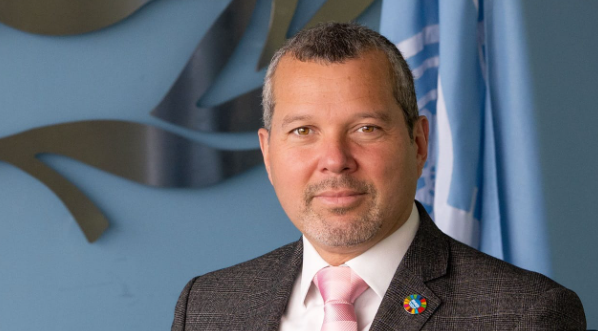
IMO Secretary-General Arsenio Dominguez has again put seafarer welfare and safety as the top priority at time when a growing number of vessels attempt to transit the Strait of Hormuz.
“I am increasingly concerned by reports that vessels continue to attempt to transit the Strait of Hormuz without any credible security guarantees, despite well‑established risks and the fact that seafarers have already been killed, injured and others detained in recent incidents,” Dominguez said in a statement.
“My primary concern is for the safety and lives of the seafarers being placed in these situations. They must not be exposed to conditions where the risks are known, significant, and clearly beyond mitigation. The current situation remains highly volatile, with no reliable security assurances in place. Under such circumstances, safe passage cannot be considered to exist.”
The IMO Secretary-General’s statement came as transits of the Strait of Hormuz grow despite the potential risks. Exact numbers of transits are hard to quantify with many vessels running dark, turning off AIS transponders. Reuters quoted data from Vortexa that dark transits of the Strait peaked at 65.2% of crossings in May.
Transits are being made both to the north of the Traffic Separation Scheme (TSS) via route prescribed by Iran which the country says requires approval and payment of a toll, and a southern route closer to Oman with apparent guidance from US forces, which stops short of escorts.
The Joint Maritime Information Center (JMIC) has lowered its threat level for the Strait from Critical to Severe in recent days. “Due to the number of safe transits conducted via the southern route, this threat level has been reduced from Critical to Severe,” JMIC said in a 9 June update. It put the number of transits on 8 June as just eight, based on commercially available data, compared to an average of 138 per day prior to 28 February.
With the conflict between US – Israel and Iran now having passed the 100-day mark the commercial pressure for ships stranded in the Arabian Gulf to exit will grow, as will the push to restart oil and gas exports through the Strait. US Energy Secretary Chris Wright said on Tuesday that ship traffic and oil exports through the Strait were growing and would “continue to grow”.
IMO Secretary-General Dominguez was clear that commercial concerns should not be allowed to override crew safety concerns.
“No commercial or operational consideration can justify exposing seafarers to such levels of danger. The protection of their lives must remain the overriding priority at all times,” he stated.
“I urge all stakeholders to act with the highest level of responsibility and reiterate my call on all parties to refrain from any actions that place innocent civilian seafarers at risk.”
Related Posts