Shippingtelegraph: Greece returns to global shipbuilding map with new deal
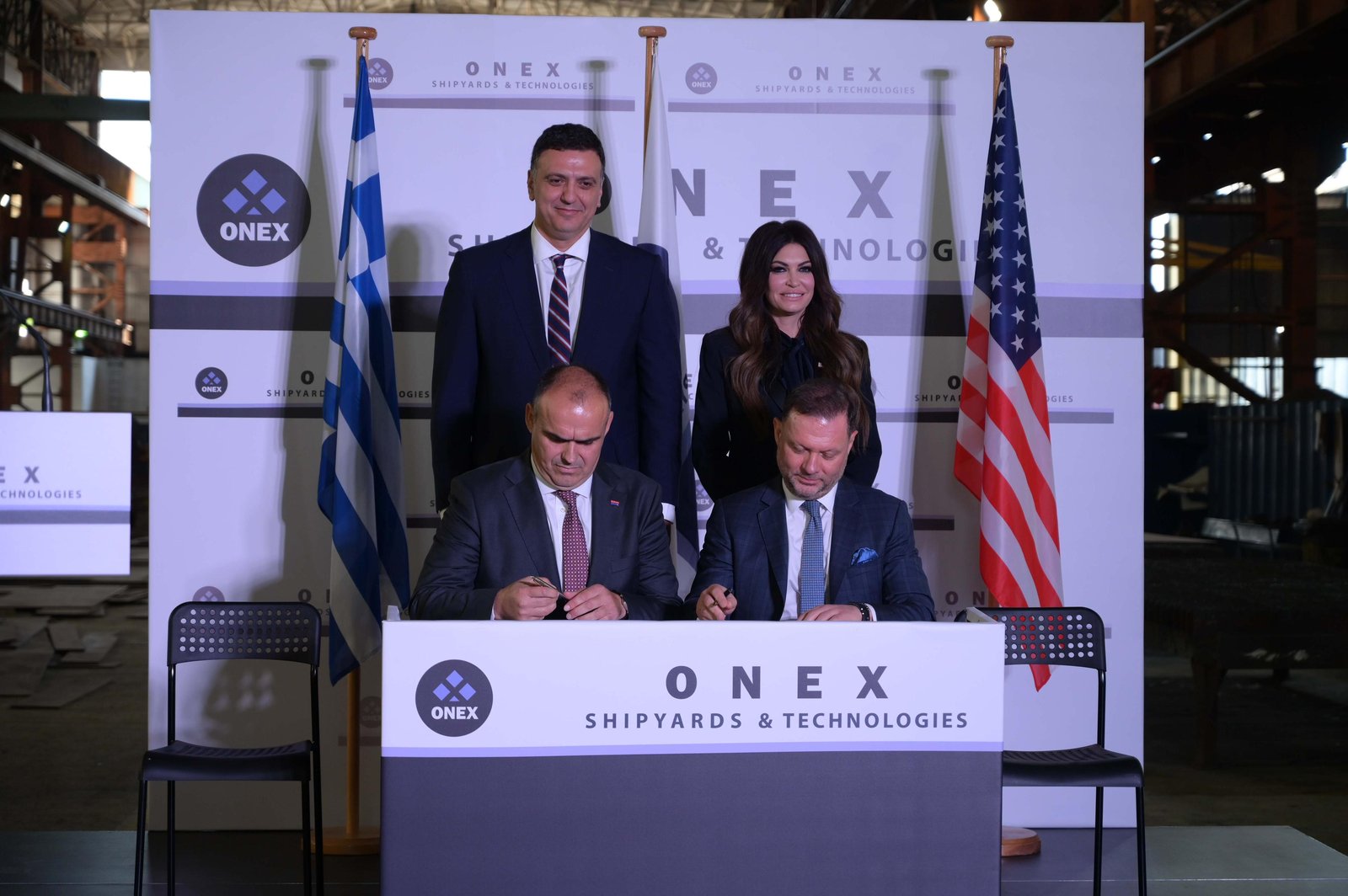
Greece’s shipbuilding industry is set for a major boost after ONEX Shipyards & Technologies Group and Megatugs Salvage & Towage signed a landmark agreement for the construction of two new tugboats, with an option for two more. The vessels will be built entirely in Greece, marking a new chapter for the country’s domestic shipbuilding sector.
The agreement marks the first commercial tugboat shipbuilding project in Greece in many years and represents an important milestone in the revival of domestic shipbuilding activity.
In an atmosphere of optimism, the ceremony for the signing of the contract for the construction of tugboats was held at ONEX’s shipyard facilities in Elefsina, in the presence of the United States ambassador to Greece, Kimberly Guilfoyle, the president and chief executive officer of ONEX, Panos Xenokostas, the minister of maritime affairs and insular policy, Vasilis Kikilias, and the director of Megatugs Salvage & Towage, Paul M. Xiradakis.
The Greek minister of maritime affairs and insular policy, Vasilis Kikilias, took the floor, noting that the signing of the contract opens the way for new investments in the shipbuilding sector, always within the framework of Greek and European legislation.
He stressed the importance of enhancing safety in ports and seas and described the agreement as a symbol of development, investment and substantial cooperation between Greece and the United States in the shipping sector.
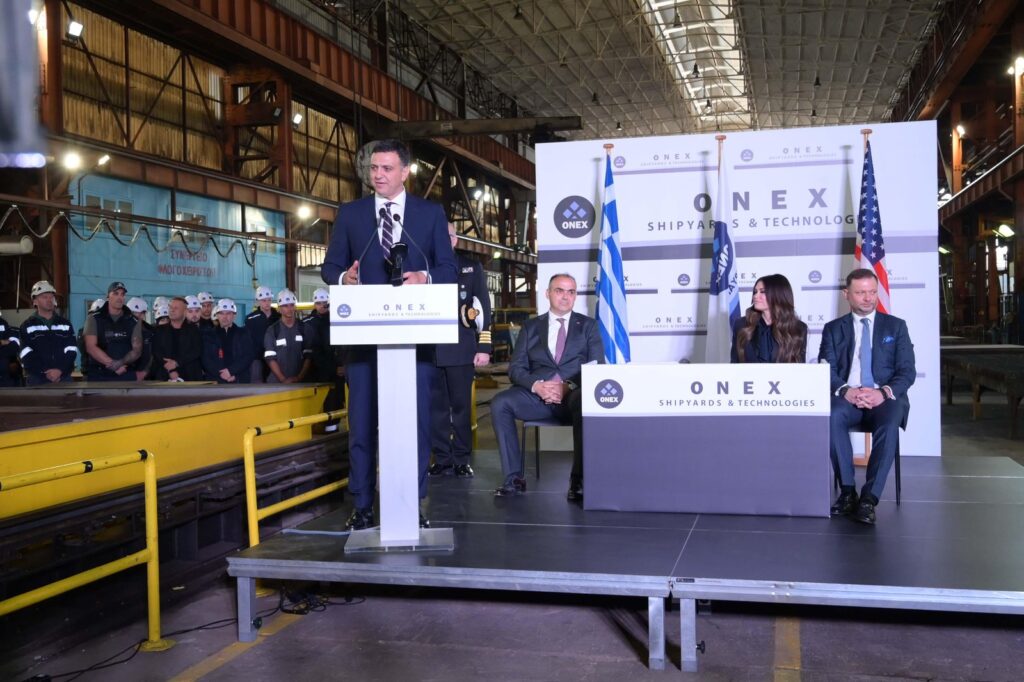
Photo credit: Greek ministry of maritime affairs and insular policy
“In the Greek government and in the ministry of maritime affairs and insular policy, we are very happy and satisfied to be here with you today, as security issues in ports and security issues at sea – are very important to us,” the minister highlighted in his speech.
With this agreement, the possibility is given, as the minister said, within the framework of Greek and European legislation, to make other investments in ships, in crane ships, in ships important in terms of security.
Officials said the investment is part of the broader goal of strengthening shipbuilding activity on Greek soil and highlights the crucial role of Greek ports as key gateways for trade and security, as tugboats play a decisive role in the management of navigation and in the protection of ships and port facilities.
Increased Activity Around LNG and US Partnerships
Greece seeks to capitalize on its role with more investments, infrastructure upgrades, and strengthening its international standing.
Behind investments, and infrastructure upgrades, a plan is unfolding that links energy, defense, and transport security. The U.S. intention to utilize critical port infrastructure in Greece is neither piecemeal nor temporary.
Washington views Greece not just as a buyer but as a strategic partner, channelling new LNG flows to Europe to gradually replace Russian gas.
Greece and the United States are deepening their energy partnership, positioning Greece as a key entry point for US liquefied natural gas (LNG) into Europe. While this strategy has been underway for some years, it was significantly reinforced at a major energy summit in Athens attended by senior U.S. officials with discussions focusing on infrastructure, investment, and regional energy security.
Washington’s ambition is to flood Europe and Greece with American LNG. Replacing Russian gas strengthens energy security in the short term but creates new dependencies.
If U.S. export policy changes or global LNG prices spike, Greece will have few immediate alternatives, analysts say.
This transition is more than a commercial adjustment; it represents a geopolitical reshaping that redefines Greece’s role as a major regional hub for liquefied natural gas, extending energy access as far as Moldova and Ukraine.
European Parliament approves Russian LNG import ban
The European Parliament on Dec. 17 approved the gradual ban on pipeline and liquefied natural gas imports as of 2026.
Spot-market Russian liquefied natural gas (LNG) will be banned from the EU once the regulation enters into force in early 2026, while pipeline gas imports will be phased out by 30 September 2027.
During negotiations, the co-legislators advanced the phase-out timelines for most import contracts. The new law also establishes penalties to be enforced by member states against operators for infringements.
During negotiations with the Danish presidency of the Council, members of the European Parliament (MEPs) pushed for the banning all imports of Russian oil and secured a commitment by the European Commission to present legislation for this in early 2026 so an effective ban can enter into force as soon as possible and no later than late-2027.
MEPs also pushed for stricter conditions under which a temporary suspension of the import ban can occur, in emergency situations in relation to EU energy security.
“Our key priorities were to accelerate the timeline for banning pipeline gas as much as possible, prohibit long-term LNG contracts one year earlier than foreseen, and prevent circumvention of these new rules. Now, we must act without delay to implement this agreement and turn our attention to oil imports, where we will hold the European Commission to its commitment to make a proposal early in 2026,” lead MEP for the industry, research and energy committee (ITRE), Ville Niinistö (Greens/EFA, Finland) said.
Related Posts