Splash247: Autonomous barge completes terminal-to-terminal voyage in Rotterdam
Published by Splash247
The Port of Rotterdam has completed what it describes as a major step forward in autonomous shipping after an inland vessel successfully sailed between terminals without active human control during a live demonstration in one of Europe’s busiest ports.
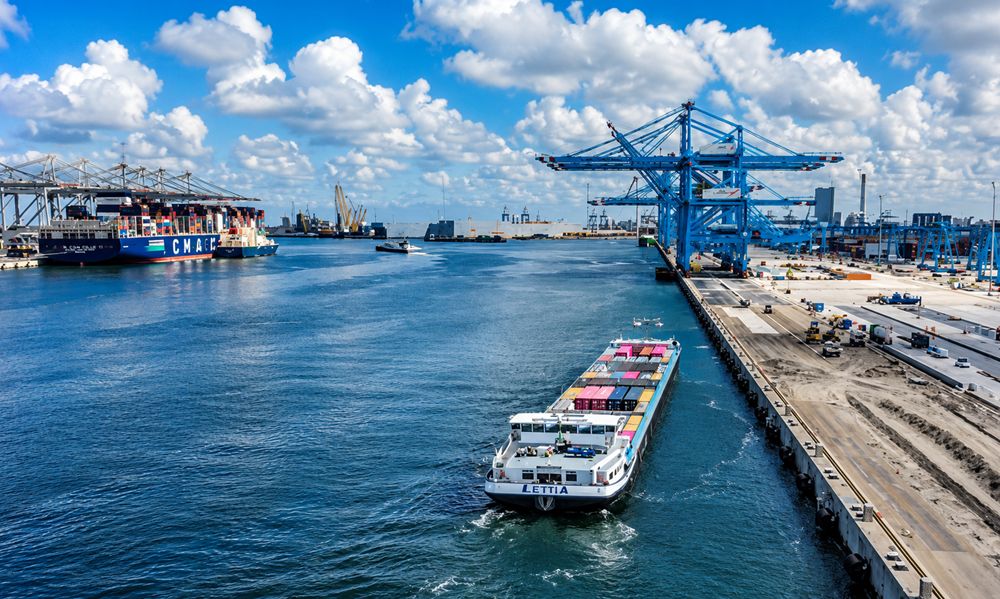
The trial saw the inland container vessel Letitia, operated by HTS Group, complete an autonomous voyage from the Amaliahaven on Maasvlakte to Waalhaven, navigating through Europoort and the Nieuwe Waterweg while sharing waterways with regular commercial traffic.
During the demonstration, the vessel carried out key manoeuvres independently, including undocking, navigating through the port area and docking at its destination. The onboard system continuously monitored surrounding traffic, detected other vessels and adjusted its route when required to avoid potential conflicts.
While the vessel operated autonomously, the skipper remained on board and retained ultimate responsibility for the voyage, with the ability to intervene at any time.
The demonstration formed part of the European Union-backed MAGPIE project, which is focused on accelerating innovation in ports through digitalisation, clean energy and sustainable logistics.
Oscar van Veen, director of innovation at the Port of Rotterdam Authority, said autonomous navigation could help improve the efficiency, reliability and flexibility of inland shipping, which remains a key transport mode for cargo moving to and from the port’s hinterland.
“Inland shipping reduces pressure on the road network and moves cargo more energy efficiently than road transport,” Van Veen said. “With freight volumes continuing to grow, it is important that inland shipping maintains and expands its role in the transport chain.”
Autonomous navigation is one of 10 demonstration projects being developed under MAGPIE, which brings together 45 partners from across Europe. The programme is exploring technologies across maritime, inland waterway, rail and road transport.
The project partners behind the autonomous vessel trial – Alphatron Marine, Argonics and Argonav – said elements of the technology demonstrated in Rotterdam are already being incorporated into commercial navigation assistance products for inland vessels.
Rotterdam has increasingly positioned itself as a testbed for smart port technologies, with autonomous shipping, digital traffic management and alternative fuels all featuring prominently in its innovation programme. The latest trial moves autonomous inland navigation from controlled testing environments into day-to-day port operations, providing valuable data on how such systems perform in complex and congested waterways.
Related Posts