Splash247: Hapag-Lloyd and Kuehne+Nagel team up on greener box shipping
Published by Splash247
German carrier Hapag-Lloyd and logistics giant Kuehne+Nagel have launched their first joint sustainable shipping initiative, using waste-based marine biofuels to cut emissions on container cargo moving between Asia and Europe.
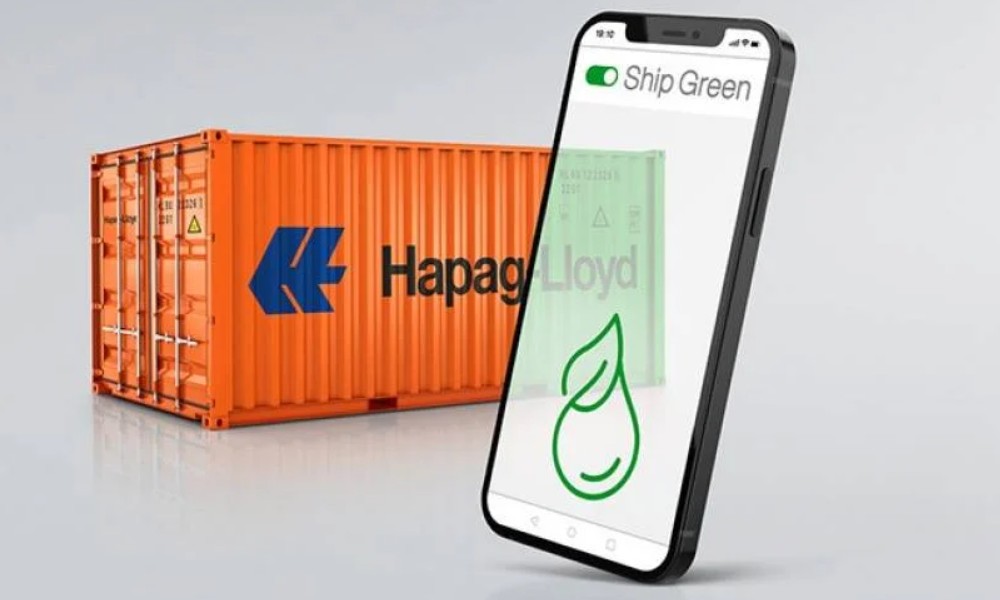
The agreement will see Kuehne+Nagel use Hapag-Lloyd’s Ship Green programme for shipments on the East Asia to North Europe trade between April and December 2026.
Around 3,300 teu of cargo will be covered under the pilot scheme, with the partners expecting to reduce emissions by about 2,979 tonnes of CO₂ equivalent on a well-to-wake basis.
The programme will use roughly 1,000 tonnes of RED III-compliant sustainable marine fuel made from waste and residue-based feedstocks.
The deal marks the first direct collaboration between the two companies on low-emission ocean freight solutions and reflects growing demand from cargo owners and logistics groups for lower-carbon shipping options ahead of tightening environmental rules.
Danny Smolders, managing director of global sales at Hapag-Lloyd, said the agreement showed how partnerships can help scale practical emissions-cutting measures in shipping.
“With Ship Green, we offer a scalable solution that enables our customers to actively reduce their Scope 3 emissions today,” he said.
Kuehne+Nagel said the partnership would help customers access verified emissions reductions through commercially workable solutions rather than waiting for future fuels and technologies to mature.
Paolo Montrone, head of trade global sea logistics at Kuehne+Nagel, said decarbonising shipping depends on transparency and collaboration across the supply chain.
The agreement uses a book-and-claim model, allowing customers to claim emissions savings linked to biofuel use even if the fuel is not physically consumed on the exact vessel carrying their cargo. Under the system, only verified emissions reductions generated from biofuel used within Hapag-Lloyd’s operated fleet are allocated to Kuehne+Nagel.
The approach is increasingly being adopted across container shipping as carriers and cargo owners look for flexible ways to reduce Scope 3 emissions while supplies of alternative fuels remain limited.
Hapag-Lloyd has set a target of reaching net-zero fleet operations by 2045, while Kuehne+Nagel aims to achieve net-zero emissions across its value chain by 2050.
The latest partnership adds to a growing number of biofuel agreements emerging in liner shipping as operators seek near-term solutions to meet customer demand for greener transport while the industry works towards longer-term adoption of fuels such as methanol, ammonia and hydrogen.
Related Posts