Splash247: How can the IMO reassert its role as shipping’s global regulator?
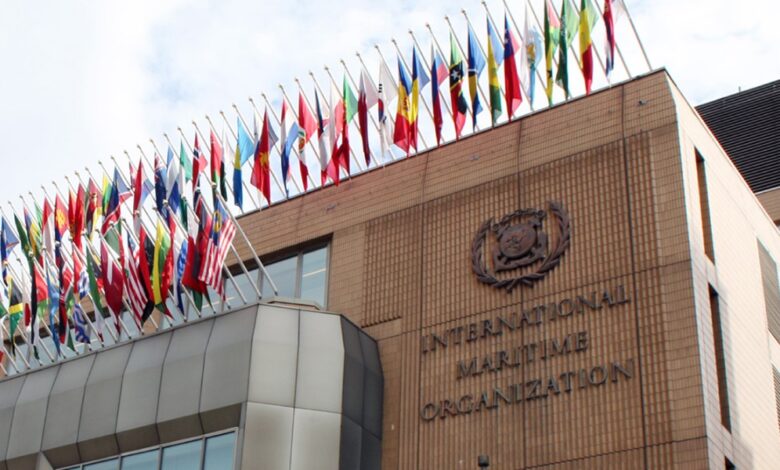
The latest installment from Maritime CEO’s guide to shipping in the Year of the Horse.
Following last October’s dramatic failure to get the Net-Zero Framework (NZF) over the line, and the current US administration’s disdain for many branches of the United Nations, the International Maritime Organization (IMO) finds itself under red-hot pressure heading into the Year of the Fire Horse, its legitimacy as shipping’s global regulator has arguably faced no greater strain in its 78-year history.
Not for nothing, Arsenio Dominguez, the genial, hard working Panamanian leading the UN body, stressed the importance of “getting things done” in 2026 in his New Year’s message. Dominguez vowed 2026 would be a “year of implementation; moving from plans to concrete actions and measurable progress”. But just how much can he cajole out of member states in the coming months?
Essential and irreplaceable
Costas Delaportas, president and CEO of Greek owner DryDel Shipping, is adamant that the IMO is still the top global regulator, because it’s the only body that can set truly worldwide rules for international shipping. However, like everyone polled for this report, he concedes the London body is “under pressure”.
“Regional regimes such as EU ETS and FuelEU Maritime are already shaping behaviour, and if IMO implementation is slow or unclear, the industry ends up with a patchwork of overlapping rules,” he says, arguing that the IMO’s leadership will be judged on speed and realistic execution, not announcements.
Alex Karydis, a director at German shipowner Hanse Bereederung, says the IMO is essential and irreplaceable, albeit under pressure.
“Regional initiatives are filling perceived gaps, sometimes at the expense of global consistency and progress,” he says. “The challenge for the IMO is to reassert relevance through clarity, enforceability, and realistic transition pathways. Fragmentation increases if confidence in global regulation weakens.”
“The IMO provides a platform for collaboration and open discussions for the improvement of the maritime industry,” maintains Captain John Lloyd, CEO at the Nautical Institute.
Quite so, agrees Peter Hult, CEO at VIKAND, a maritime medical specialist. “Regulations should not only set minimum standards but also encourage operators to invest meaningfully in their people,” he advises.
Arun Sharma, executive chairman of the Indian Register of Shipping, describes the IMO as the “cornerstone” of the global maritime regulatory framework. Its effectiveness, he argues, will increasingly depend on timely rule development, clear implementation guidance, and consistency in application, particularly as new technologies, fuels and operational models are introduced across the industry.
Henrik Jensen, CEO of crewing specialist Danica, sees the IMO as remaining very much “critical” to the industry.
“Shipping is unique in its level of global standardisation, and the IMO has been instrumental in making international trade possible. It is essential that the rest of the world continues to support and strengthen the IMO’s role,” he urges.
Regulator vs lobbyist
Of all those surveyed for this report, the sharpest criticism for the UN body came out of Limassol and the office of Mark O’Neil, the CEO of Columbia Group. The failure to get the NZF voted through, he maintains, stemmed not from its failure as a global regulator but from what O’Neil describes as the IMO’s “misconceived and somewhat naive attempt” to assume the role of global shipping lobbyist for which, he says, it is “woefully” ill-equipped.
“We need to separate out the functions of lobbying/agreement, and the separate function of regulating what has been agreed,” O’Neil urges. Moreover, given what he sees as the gradual erosion of a global rules-based order, and its replacement with regionality and national interests, O’Neil questions whether structures and organisations such as the IMO have had their time in their present form and require radical overhaul in order to remain relevant.
Vikas Trivedi, co-CEO at rival manager Synergy Marine Group, agrees that consensus-based processes are being tested by the pace of change and by regional initiatives moving ahead independently.
“The risk is not irrelevance, but fragmentation around the edges,” Trivedi says, adding: “The challenge for the organisation is to align ambition with implementability, ensuring regulations remain workable at ship level.”
Mikael Skov, the CEO of product tanker giant Hafnia, is still backing the IMO, as he cannot see any realistic alternative if the industry is to avoid further fragmentation. That said, he admits the recent outcomes have shown how difficult it is to align a highly diverse industry behind complex global frameworks.
“Going into the Year of the Horse, regulation needs to be technically robust, clearly articulated, and supported by workable implementation plans – not left at a high level,” Skov suggests, stressing that the IMO must recognise that shipping is not monolithic. “Legislation that may suit liner trades does not necessarily translate well to tramp or tanker markets,” he points out.
Dr Jens Tülsner, CEO and founder of Marine Medical Solutions (MMS), can see a risk of credibility gaps if targets aren’t matched by practical pathways and consistent implementation.
The aviation model
One suggestion mooted by Captain Kuba Szymanski, secretary-general at InterManager, is to move the model of the IMO more closer to its aviation counterpart, the International Civil Aviation Organization (ICAO), another UN agency.
“It is striking how two industries with so much in common can be so different in practice—particularly in shipping’s entrenched blame culture, which remains one of the biggest barriers to progress,” Szymanski notes.
Kris Vedat, CEO of SmartSea, a maritime digital transformation specialist, and Rob Mortimer, CEO of fuels provider Fuelre4m, have the final words on the matter.
“Global regulation only works when supported by common standards, consistent data and enforceable mechanisms,” Vedat says, a point of view shared by Mortimer who tells Maritime CEO: “Regulation alone won’t decarbonise shipping. What matters is how rules translate into operational behaviour. If regulation incentivises real efficiency gains rather than box-ticking compliance, it remains relevant. If not, the industry will move faster than the rulebook.”
Related Posts