Splash247: How this year will define the future of shipping technology
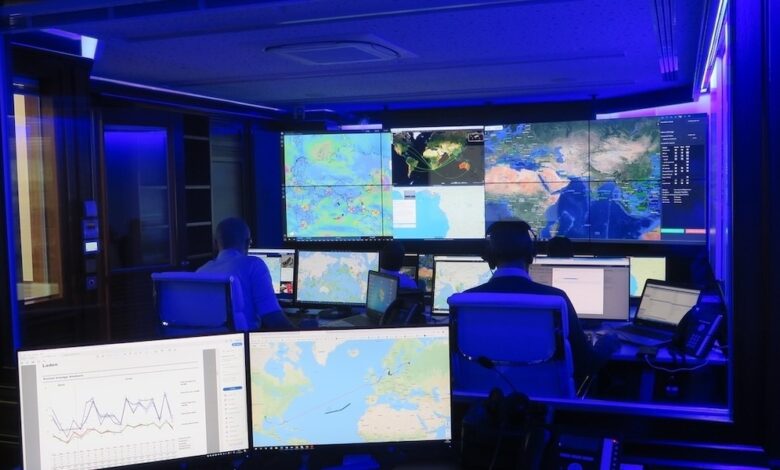
Every year, Maritime CEO reaches out to ask the industry for what they see as the big tech developments or breakthroughs we should anticipate. Answers are carried below
As we move through 2026, the maritime industry is entering a critical maturation phase. The initial gold rush of digital adoption – where the mere act of installing new software was considered a victory – is being replaced by a more pragmatic, outcomes-based approach. The hype cycle of artificial intelligence and connectivity is giving way to the cold, hard reality of operational efficiency, system integration, and human-centric design. Industry leaders are no longer asking if they should digitise, but rather how to ensure those digital tools deliver genuine, sustainable value.
AI and processing power
For Arthur English, CEO of Norwegian shipowner G2 Ocean, the coming 12 months will serve as a definitive litmus test for maritime organisations. The landscape is splitting into two camps: those who successfully harness technology and those who will be left behind.
“We will start to see the effects of intelligent business processes and how this will separate between companies who are able to utilise AI tools to create business value and the ones that are lagging behind,” English reckons. This divergence will be driven largely by the raw technical capacity to compute. As English points out, “More powerful processing power capable of running powerful optimisation models and enabling complex datasets to be analysed will enhance decision making. Combined with AI tools this has the potential to really make a difference and think we will start seeing this in 2026.”
Crucially, this digital evolution is supported by a changing landscape in infrastructure. “Due to more competition in the satellite market, we are expecting fleet and shore communication will further advance and take digitalisation in shipping a step forward in 2026,” he adds.
From experimentation to reliability
Building on this momentum, the focus is shifting from AI as a toy to AI as a tool. Kim Sørensen, CEO of StormGeo, observes that the primary shift for the next year is a move toward operational certainty.
“First, AI will become a standard part of daily voyage decision-making and optimisation. I expect the focus on AI to shift from experimentation to actual operational reliability,” Sørensen explains. He notes that the era of AI-driven rote tasks is here: “For example, AI will increasingly be used to automate time-consuming, repeatable, and routine decisions in weather routing services, while leaving safety-critical situations to human experts.”
Beyond pure AI utility, Sørensen identifies a desperate need for ecosystem consolidation. “Second, shipping companies will increasingly move away from multiple standalone tools toward more integrated platforms that support a broader part of the value chain,” he says. The “fragmentation fatigue” among operators is palpable. “Instead of having several vendors for different functions, such as voyage planning, bunker management, emissions compliance, and more, I foresee companies gradually shifting to vendors that can support a broader part of the value chain.” To ensure this works, he emphasises that, “In an era where access to information and data has never been greater, user-friendliness and visualisation in maritime tech will become more important.”
Operationalising intelligence
Kris Vedat, CEO of SmartSea, echoes the call for deeper integration, arguing that we must move past the idea of AI as an external analysis layer.
“AI will increasingly be built directly into operational workflows – voyage execution, maintenance planning, safety management and commercial decision-making – rather than sitting as a separate analytics layer,” Vedat states. This represents a fundamental change in how ship managers interact with software; the AI becomes the system itself, rather than an advisor to it.
Vedat also points to the necessary maturation of digital infrastructure, specifically identity. “Digital identity becoming foundational. Secure digital identity for people, systems and devices will underpin cyber security, compliance, and trust across maritime operations, much as it already does in aviation and financial services.” Finally, he reframes the conversation around connectivity: “LEO connectivity will matter less for headline speeds and more for enabling vessels to function as fully connected digital workplaces, supporting continuous operations, updates and collaboration.”
The rise of agentic AI
Joy Basu, CEO of Smartship Hub, underscores that the quality of the input data is the ultimate bottleneck for these ambitions.
“Need for high-quality low cost data for intelligence, situational awareness and actionable insights will spearhead implementation of high frequency sensor data acquisition from onboard machinery and processes,” Basu explains.
Once that data is secured, the next phase is the emergence of agentic AI. Basu predicts: “Enhanced data collection will lead to data-driven, contextual, business-relevant intelligence driven by agentic AI and Gen AI.” Similar to Sørensen’s vision, Basu sees the market moving toward a centralised model: “Platforms globally will make the move towards consolidation. Instead of working with multiple service or tool providers owners/ operators will prefer to work with digital platforms that allow single platform access and multiple features.”
The human friction factor
However, as Raal Harris, the vice president of InterManager, reminds the industry, technology is not a vacuum. Digitalisation often arrives with a hidden cost-friction.
“The problem is that digital systems have been added over time, rather than designed to work together from the start,” Harris warns. “Technology providers are often asked to solve specific issues in isolation, which can result in tools that work well individually but create friction when used together.” This disconnect creates a significant burden for the crew. “Without closer cooperation across the industry, seafarers are left to manage the consequences of systems that do not naturally fit alongside one another. When crews are expected to use multiple applications simply to complete a single task, the industry cannot claim that digitalisation is easing life at sea.”
Harris calls for a pivot toward human-centric design: “If digitalisation is to succeed, it must be shaped around the people who rely on it every day. Seafarers need tools that reduce friction rather than add to it, and interfaces that reflect the realities of shipboard life, where connectivity is uneven and workload is already high.”
Connectivity as a utility
Paul Morgan, head of engineering at GTMaritime, provides a vital reality check on the “connectivity is solved” narrative. While bandwidth is increasing, dependability remains the challenge.
“More bandwidth at sea accelerates demand rather than solving connectivity challenges,” Morgan explains. He cautions against complacency: “The belief that Starlink-style links remove the need for maritime-native systems confuses raw bandwidth with dependable service: maritime links degrade, switch, and face weather, routing and geopolitical interruptions.”
For Morgan, the next year is about resiliency. “As fleets add more data-hungry apps and reporting, optimisation’s role has shifted from airtime cost-cutting to ensuring continuity, security and data integrity.” He concludes with a directive for the industry: “Effective maritime optimisation therefore requires breakpoint recovery, prioritisation, automation and integrity assurance. Providers that make connectivity behave like a utility – dependable, secure and predictable – will win trust.”
Shaping, not just measuring
Ultimately, the theme for 2026 is one of action. As Soma Sundar, co-Founder and CEO of Bigyellowfish Technologies, succinctly puts it, the industry is graduating from passive observation to active engagement. Maritime tech, he argues, will move beyond the metrics of the past: “The next wave of maritime tech will not only measure performance, but actively shape it.”
In the coming 12 months, the companies that thrive will be those that integrate their data, protect their connectivity, and remember the human beings operating at the edge of the network. The tools are ready; the era of implementation has begun.
Related Posts