Splash247: Is third-party shipmanagement an anachronism or an industry at a crossroads?
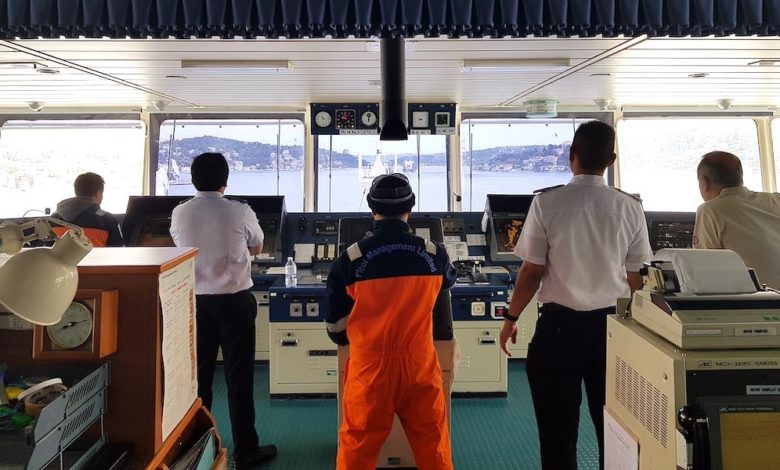
Sunil Kapoor on the future of shipmanagement. It’s all about differentiation, he argues.
“Traditional third-party ship management has become an anachronism. It must evolve — or it will wither on the vine and surely die.”
For the past four years, this statement has echoed across conferences and boardrooms. It is often delivered with conviction, framed within a broader narrative of digital disruption and structural transformation.
But does the evidence support it?
If third-party ship management were truly obsolete, it would be contracting. Instead, some of the largest managers now oversee fleets exceeding 400 vessels. Consolidation continues. Investment in compliance teams, digital platforms, ESG reporting, crew development, and cybersecurity infrastructure is increasing.
Much of this investment is not driven by marketing ambition, but by regulatory and operational necessity. The pressure is internal — compliance, transparency, accountability — rather than simply a race to attract new clients.
This is not decline. It is industrialisation.
The real challenge facing shipmanagement is not irrelevance — it is differentiation.
From an owner’s perspective, management platforms can appear increasingly similar. The same planned maintenance systems. The same procurement structures. The same reporting formats. The same regulatory dashboards. Operating costs across fleets have largely standardised — crew wages, insurance premiums, lubricants and spare parts follow global benchmarks.
In such an environment, management risks becoming a comparison of fees rather than performance.
Yet shipping is not a commodity business at the operational level. Ships are complex, high-value assets operating in unforgiving conditions. A single major breakdown can increase annual operating costs by double-digit percentages. An incident poorly handled can damage chartering prospects for years. Compliance missteps can trigger reputational and financial consequences far beyond the initial event.
Performance still matters. And performance ultimately depends on people.
This became clear to me at a Capital Link forum in New York. I was standing next to a tanker owner waiting to meet a minister. When he learned that my background was in third-party shipmanagement, he made a pointed observation: “At this stage, most companies provide the same service. I look at who the superintendent is on my vessel.”
It was a simple statement, but it cut to the heart of the issue.
The technical superintendent remains the backbone of any shipmanagement organisation. If there is one structural weakness that could undermine the sector, it is the gradual dilution of this role within increasingly corporatized platforms.
A strong superintendent understands far more than maintenance schedules. He understands crew dynamics, the vessel’s history, the charterer’s expectations, and the owner’s risk appetite. He detects early warning signs long before they become formal reports. He translates policy into practice. He bridges the gap between strategy and steel.
In earlier years, we often described the superintendent as the “owner” of the vessel within the management company. Other departments — quality, tanker operations, dry operations, crewing and procurement — existed to support him in delivering safe and efficient performance.
I recall numerous senior management meetings where lengthy debates about incidents shifted entirely once the superintendent explained what had actually occurred on board. Context changes judgment. And context comes only from someone positioned at ground level who understands operational realities.
My own experience as a superintendent predates digital integration. We relied on telex, fax machines and physical documentation. There were nights when I drove to the office after midnight to retrieve certificates, make copies and fax them across time zones. Today, documents are stored electronically and transmitted instantly. Technology has undoubtedly improved efficiency.
But technology has not replaced accountability.
In large corporate structures, there is a dangerous drift: the superintendent risks being reduced to a telephone operator — passing messages between the ship, headquarters and engine makers, escalating problems upward, but stripped of real authority to decide. He becomes a reporting conduit rather than a technical leader. As layers of management expand, he grows more distant from owners, excluded from strategic discussions, yet when performance slips or an incident occurs, he is the first name questioned. Authority is centralised; accountability is not. When that imbalance sets in, shipmanagement begins to weaken from its core.
I experienced this dynamic when a major owner expressed concern after one of our most experienced superintendents left his fleet. Predictably, operational consistency began to decline. The owner was not reassured by charts or presentations; he wanted to meet the people responsible for his ships.
I travelled with the technical manager and superintendents to Athens for a full-day session. For more than six hours, we were questioned on maintenance philosophy, spare parts planning, crew rotation strategy and drydock preparation. The turning point was not a PowerPoint presentation. It was the confidence inspired by technical depth and clarity of responsibility.
Trust was restored because accountability was visible.
Later in my career, moving from management into ownership reinforced this perspective. As a manager, you report operating costs. As an owner, you absorb them. As a manager, you explain off-hire days. As an owner, you calculate their financial impact in real time.
From the owner’s position, the central question is not whether ship management is fashionable or outdated. It is whether the manager understands risk — technical, operational and financial — as deeply as the owner does.
Third-party shipmanagement is not an anachronism. It is at a crossroads. The sector must move beyond being perceived as a service contractor and instead position itself as a risk partner. Owners do not need more reports. They need foresight. They need empowered technical leadership. They need decision-makers aligned with their capital exposure.
The future will not belong automatically to the cheapest provider, nor solely to the largest platform. It will belong to organisations that combine structured systems with strong, visible technical accountability.
Ships do not fail because of software limitations. They fail because of decisions — delayed decisions, misunderstood signals, or insufficient oversight. And decisions remain human.
Declaring shipmanagement an anachronism may generate debate. But the industry is not withering. It is being tested.
In shipping, survival has never depended on rhetoric. It has always depended on who stands accountable when the sea turns rough.
Related Posts