Splash247: Taiwan tightens noose on high-risk tonnage
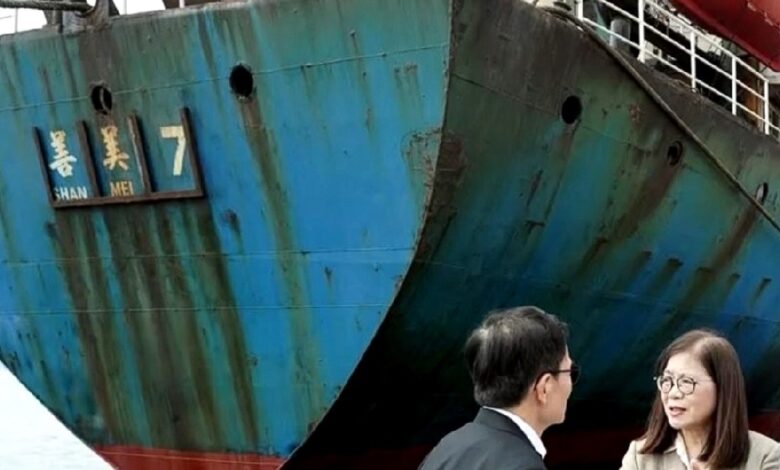
Taiwan is amending its Law of Ships regulations with a view to fining ship operators up to NT$10m ($318,000) for vessels failing to maintain accurate identification.
Ships entering Taiwanese waters must keep their automatic identification system (AIS) on and transmit correct data, or face a fine.
Similarly, all vessels must display their vessel name and IMO number in visible markings unless exempted by SOLAS rules. These markings cannot be altered or concealed.
Vessels of 150 metric tons or more must keep a logbook with accurate records of navigation and incidents while in Taiwan’s territorial or restricted waters.
Taiwan began enforcing a new shipowner liability insurance review system in October, the latest in a string of measures aimed at tightening control of questionable vessels entering its ports.
All ships calling at Taiwan’s commercial ports must show proof of protection and indemnity (P&I) cover from either one of the 12 members of the International Group of P&I Clubs, a Taiwanese underwriter, or from an insurer with a minimum BBB rating from an international credit agency. Authorities said 96.7% of vessels trading with Taiwan already comply.
Ships that fail to meet the criteria will either be required to lodge a deposit or risk being denied port entry altogether.
The move follows a series of initiatives rolled out by Taipei in recent years to strengthen maritime governance and insulate its waters from what officials have called “high-risk” tonnage, amid various attempts by ageing merchant ships to cut subsea cables.
In 2023, Taiwan introduced tighter vetting of vessels with opaque ownership structures. That same year, port authorities carried out a record number of safety inspections, singling out ships over 20 years of age and ships flagged with registries on international watchlists.
Officials have also sharpened financial oversight of tonnage calling in, requiring more transparency in payments and insurance documentation, while customs officers have been given expanded powers to seize ships suspected of falsifying AIS signals.
Following reports of cable breakage and to strengthen the safety of Taiwan’s waters and key infrastructure, ships from Mainland China, Hong Kong and Macau from April this year are required to go through longer port visit application processes to the island with the paperwork expected to take up to a month per vessel visit. Ships also flying the flags of Cameroon, Tanzania, Mongolia, Togo and Sierra Leone are also required to fill in the extra filings, many of which will be screened by Taiwanese security officials before being passed on to the MPA.
Like in the Baltic, Taiwan has faced multiple attacks on its subsea infrastructure in recent months, largely from merchant ships dragging their anchors.The island blacklisted 52 Chinese-owned ships in January while Taiwan’s National Security Bureau has said ships which have previously been found to misreport information will be put on a list of ships for priority inspection at ports.
Moreover, if these ships enter within 24 nautical miles of Taiwan’s coast and are close to where undersea cables are, the coast guard will be dispatched to board them and investigate.
A ship accused at the end of February of damaging cables off Taiwan had a simple way of changing identity.
The Togo-flagged Hongtai 68 was able to change its name many times as the crews simply replaced three steel plates (pictured) at its stern and on its bow whereby it has also recently traded as the Hongtai 58 and Shanmei 7.
The captain of the vessel – dubbed in local media as the ‘thousand faces ship’ – had on an earlier occasion been caught entering Taiwan with false documents.
In related news, images have emerged of tests of a Chinese LY-1 laser weapon mounted on a civilian roro vessel.
A new update from the Institute for the Study of War in the US warns that the People’s Liberation Army (PLA) is increasingly relying on civilian cargo ships and ferries for an amphibious strike on Taiwan.
According to the institute, the PLA conducted landing exercises this summer using multiple types of civilian vessels — from roros to deck cargo ships — that unloaded vehicles and equipment directly onto beaches, bypassing port infrastructure entirely.
Related Posts