Splash247: The sudden cost of ‘good enough’ maritime weather forecasting
Isabel Houghton, head of forecasting at Sofar Ocean, carries this important warning to shipping: getting weather predictions wrong when conditions are clearly severe, they hurt most when the outlook appears manageable.
When the Baltic Klipper lost 16 containers off the Isle of Wight in December 2025, wave heights weren’t particularly hazardous. What the crew faced instead was long period swell: waves with periods exceeding 15 seconds that induced parametric rolling, a dangerous resonance phenomenon that can cause disastrous impacts to vessels in otherwise benign conditions.
The incident underscores a critical gap in how the shipping industry thinks about weather risk: forecast error doesn’t hurt most where conditions are obviously severe. It hurts most where they appear manageable.
Where forecast error hurts most
Shipowners and operators have long focused on avoiding storms with high significant wave heights. But the relationship between sea state and vessel safety is more nuanced. Parametric rolling occurs when wave encounter period aligns with a vessel’s natural roll period – a condition that depends heavily on peak wave period, a parameter that many operational forecasts handle poorly.
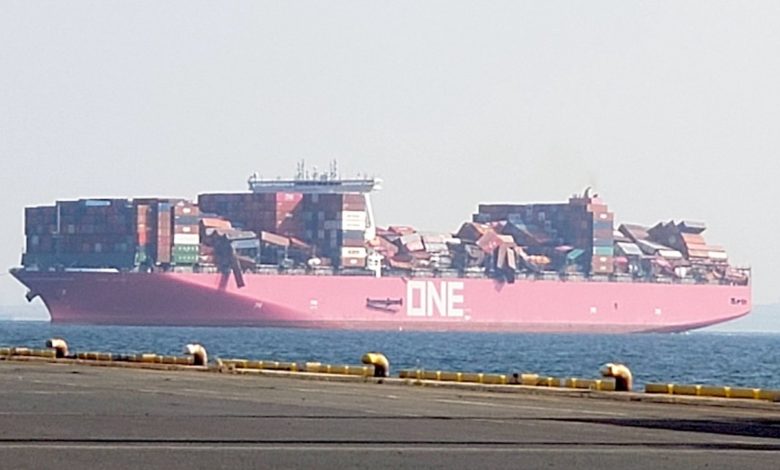
After the ONE Apus incident, CTI Consultancy estimated an average FOB value of $25,000 per box – and that’s before accounting for environmental penalties, off hire, salvage operations, schedule disruptions, and reputational damage. Issues like this deserve focused attention beyond traditional heavy weather avoidance.
Why marine weather forecasting remains difficult
Ocean wave forecasting compounds challenges in atmospheric forecasting. Waves integrate wind forcing over vast fetch distances and long time ranges, meaning errors in wind forecasts add up as they propagate into wave predictions. Swell generated by distant storms must be tracked across entire ocean basins, requiring models to accurately represent both the source conditions and the propagation physics.
Global forecast systems such as the European Centre for Medium-Range Weather Forecasts (ECMWF) – the industry standard for atmospheric forecasts – provide excellent atmospheric predictions, but their wave products are designed for broad applications and may not capture the spectral details that matter for vessel motion.
In the Baltic Klipper case, ECMWF forecasts didn’t predict the long-period swell that ultimately caused the incident. Sofar’s forecast, by contrast, used direct, proprietary observations of swell upstream to correct forecasts and captured the event more than two days in advance.
Bridging the gap
Improving predictions of both heavy weather and the more nuanced aspects of relevance to the maritime industry, like swell, requires focused development on wave forecasting systems – improving observations collected and their integration into models and tuning for critical variables like wave period. Modern voyage optimisation should incorporate probabilistic forecasts that characterise uncertainty, spectral wave information that captures period and direction, and decision-support tools that translate sea state into vessel-specific motion predictions.
For shipowners, the value proposition of better voyage optimization is straightforward: improved forecasts enable more efficient scheduling with lower risk. Rather than adding days of margin to avoid any chance of adverse conditions, they can route with confidence through conditions that are genuinely safe while avoiding those that only appear benign.
If ‘safe’ is defined only by wave height, you’re making high-stakes decisions with only half the signal. The Baltic Klipper incident serves as a reminder that despite improvements in container losses over the years, ongoing innovation in prediction remains critical. When forecasts fail to predict a swell event and containers go overboard, the explanation matters little to the cargo owners potentially facing general average. In maritime weather forecasting, ‘good enough’ is frequently insufficient.
Related Posts