Seatrade-Maritime: Protecting seafarers lives IMO’s top priority in Middle East conflict
Published by Seatrade-Maritime
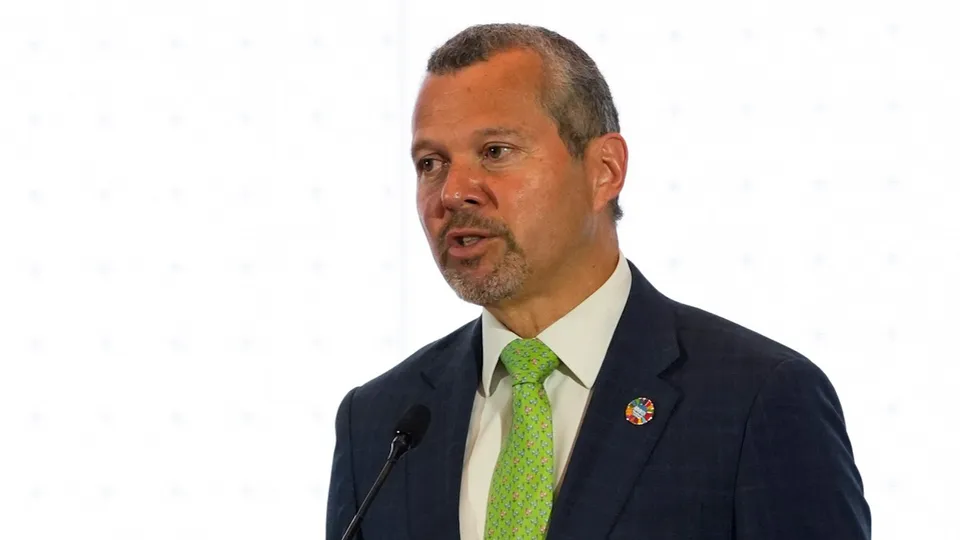
International Maritime Organization (IMO) Secretary General Arsenio Dominguez has repeatedly stressed his concerns over the safety and well being of 20,000 seafarers trapped on ships in the Gulf due to the closure of the Strait of Hormuz.
Speaking in Panama Dominguez said that the “approximately 20,000 crews and around 1,500 ships” are trapped in the Strait of Hormuz and “are innocent people who are doing their jobs every day for the benefit of other countries,” but “are trapped by geopolitical situations outside their control.”
The 20,000 crew members stranded in the region face the risk of attacks and severe restrictions on access to basic supplies such as water and food.
Faced with this situation, the sector has had to demonstrate resilience, seeking alternative routes to maintain the flow of goods, he said when speaking an audience of industry executives at the Maritime Convention of the Americas, held 7 – 8 May in Panama.
Dominguez, added that “the Panama Canal is one of the essential waterways for everyone in the maritime sector… it has helped ensure that some of the transport and goods that cannot be moved due to the closure of the Strait of Hormuz can find other routes.”
The Secretary-General reiterated that, whilst the conflict in the Middle East continues, the IMO’s priority will be to protect the lives of seafarers and ensure that they are not used as hostages or exposed to unnecessary risks. However, he emphasised that the sector’s resilience and the existence of alternatives such as the Panama Canal are proof that global trade can adapt and continue to function.
The industry, he said, is resilient and can seek alternative routes, but it cannot replace the basic cargoes coming from that area. He therefore reiterated his call for multilateralism and dialogue to reduce tensions
The Secretary-General reported that the IMO has established a humanitarian evacuation corridor, although he clarified that it cannot be activated until there is certainty that ships will not be attacked by drones, missiles or speedboats.
“Cargo can be insured, but a human life cannot be replaced,” Domínguez emphasised.
In this regard, he asked shipowners and operators for patience, urging them not to take unnecessary risks whilst the conflict persists.
According to the latest figures, more than 30 ships have been attacked and at least 10 seafarers have lost their lives, two of whom are still missing, which reinforces the urgency of protecting seafarers and preventing them from being used as hostages or collateral victims.
Domínguez explained that the IMO is holding discussions with countries in the Persian Gulf, in particular Oman and Iran, which have operated the traffic separation scheme in the Strait of Hormuz since 1968.
The organisation seeks to ensure that freedom of navigation is respected and that, once the conflict is over, safe passage is restored.
He also noted that the UN, through the IMO and in coordination with the International Transport Workers’ Federation (ITF), is working to ensure medical assistance and provisions for stranded crew members, despite the difficulties faced by countries in the region.
Related Posts