Seatrade-Maritime: Volatile ME peace negotiations leave shipping in limbo
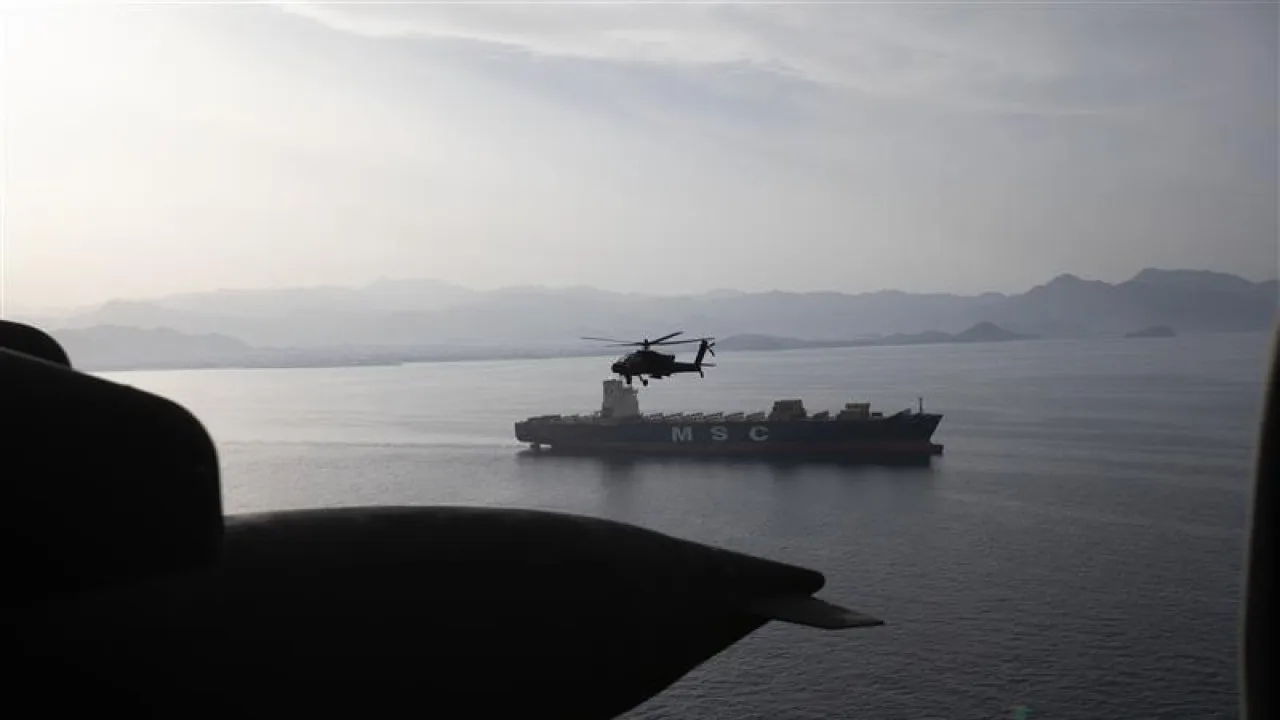
Threats and counter threats have replaced missiles in the Middle East peace negotiations with Iran now rejecting new talks in the latest blow to seafarers trapped in the Arabian Gulf.
At the start of the weekend Iran had announced that the Straits were open to all shipping, but the US said it would maintain its blockade on Iranian ports, prompting the Iranian authorities to claim a breach of the ceasefire agreement.
By Sunday evening, the Iranian government rejected the chance to enter into more peace talks with the Americans, claiming that, “Washington’s excessive demands, unrealistic expectations, constant shifts in stance, repeated contradictions, and the ongoing naval blockade, which it considers a breach of the ceasefire”, meant that it was impossible to negotiate, said the official IRNA news agency.
With the warring parties so far apart, it is difficult for logistics managers and vessel operators to manage the situation with ship operators preferred to be cautious and said they would need clarifications, including on the risk of mines, before vessels move through the Strait of Hormuz.
Bimco’s chief safety and security officer, Jakob Larsen, warned on Friday: “The status of mine threats in the Traffic Separation Scheme is unclear and Bimco believes shipping companies should consider avoiding the area.”
Freight intelligence platform Xeneta pointed to the conflicting messages the container shipping market is sending to its customers with spot rates easing on the Asia to Europe trades but rising on the Pacific and Atlantic.
“The divergence tells us that the disruption from the Middle East conflict is far from over,” commented Peter Sand, chief analyst at Xeneta.
Spot rates from Asia to North Europe and the Mediterranean have slipped by 4% and 5% respectively, over the past week, but increased 26% and 21% since the Iranian conflict began at the end of February.
On the Asia to US trades, however, spot rate increases since 28 February are significantly higher at 51% to the US West Coast and 44% to the East Coast. The westbound Atlantic trades have seen spot rates rise 43% in the same period.
While it is certain that the Middle East conflict is sending trade shockwaves around the globe, it is also certain that there are other contributing factors to this Xeneta data, including a drop in demand, and changes in offered capacity.
Xeneta’s four-week rolling average capacity data for the week commencing 13 April revealed that Asia to USWC and Europe to US trades had seen declines in average capacity of 2.3% and 9% respectively, with Asia to USEC capacity rising 4.4%.
On the European trades capacity was up 8.5% to North Europe and down 2.1% to the Mediterranean.
“Seasonal dynamics” have also come into play with a softening of European trades in the second quarter common place in European markets.
Sand, however, said: “This should not be mistaken for a structural improvement. The underlying disruption – longer transit times, lower schedule reliability, and the continued closure of the Strait of Hormuz – has not changed. What has changed is that carriers have found workarounds on certain trades.”
That means, “Any talk of normalisation needs to account for the fact that the majority of global fronthaul trades are still deep in crisis-level pricing,” concluded Sand.
Moreover, while IFO380 remains at inflated levels across the globe, compared to pre-conflict prices, the cost on the US West Coast remains substantially higher at roughly double the pre-war price, at over $1,000/tonne, compared to a $200/tonne increase in most other regions.
Related Posts