Splash247: Wärtsilä rolls out new bridge simulator as training demands rise
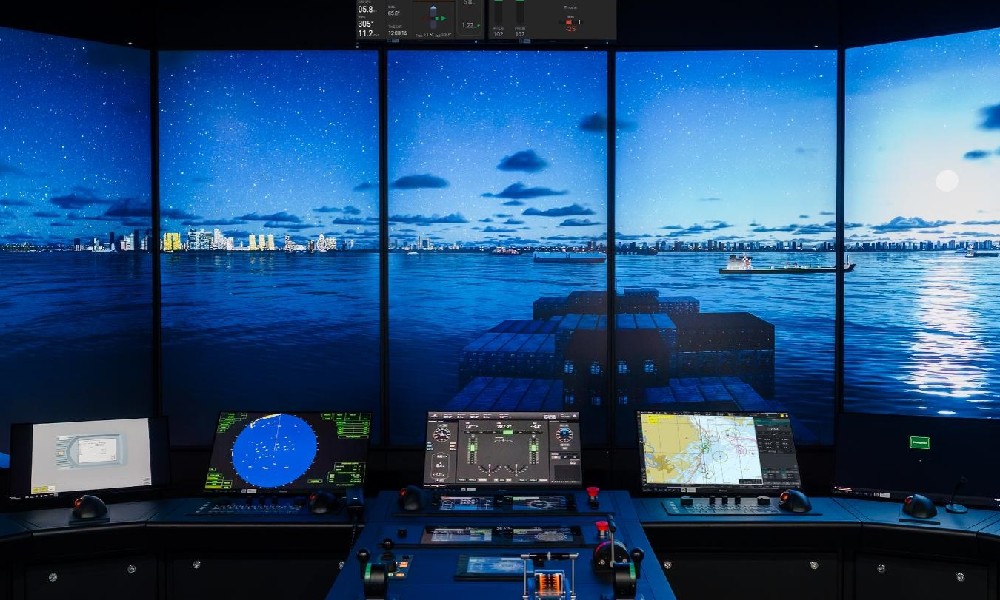
Technology group Wärtsilä has launched a new generation of its bridge simulation platform, aiming to help training centres keep pace with more complex and digitalised ship operations.
The system, branded NTPRO 7, builds on the company’s established simulator range and is designed to reflect how modern bridges now operate, with a heavier focus on digital navigation and decision support tools.
The rollout comes as training requirements tighten, with crews expected to handle increasingly advanced systems while maintaining safety in more congested and demanding trading environments.
NTPRO 7 has been developed to deliver more realistic training scenarios, combining upgraded visuals, sound and bridge layouts to better mirror real-world conditions. The platform has also secured a Statement of Compliance from DNV, confirming it meets current standards for navigation training.
“The requirements placed on maritime training are evolving rapidly as vessel technologies, digital navigation standards and regulatory expectations continue to advance,” said Johan Ekvall, director of simulation and training at Wärtsilä Marine.
“NTPRO 7 is designed to help training institutions and academies prepare crews for these changes by providing a future-ready simulation environment that mirrors modern bridge operations and supports long-term competence development,” he said.
A key upgrade is the introduction of RealSea visualisation, built on Unreal Engine 5, which brings higher fidelity visuals and more accurate environmental modelling. The system is paired with an enhanced sound setup to improve situational awareness during exercises.
The simulator also introduces updated bridge interfaces, including new conning and overhead displays that replicate current shipboard systems, alongside S-100 ready digital navigation training integrated with Wärtsilä’s Navi-Sailor ECDIS.
On the operations side, the platform includes tools such as an AI-enabled virtual watchkeeper with voice command recognition, as well as modules to support training on wind-assisted propulsion systems.
Wärtsilä said the system has been tested over the past two years and will be commercially available from May 2026.
Related Posts